Discours de la méthode, by René Descartes
Westminster School
London, Royaume-Uni
www.westminster.org.uk
🇫🇷 🇬🇧
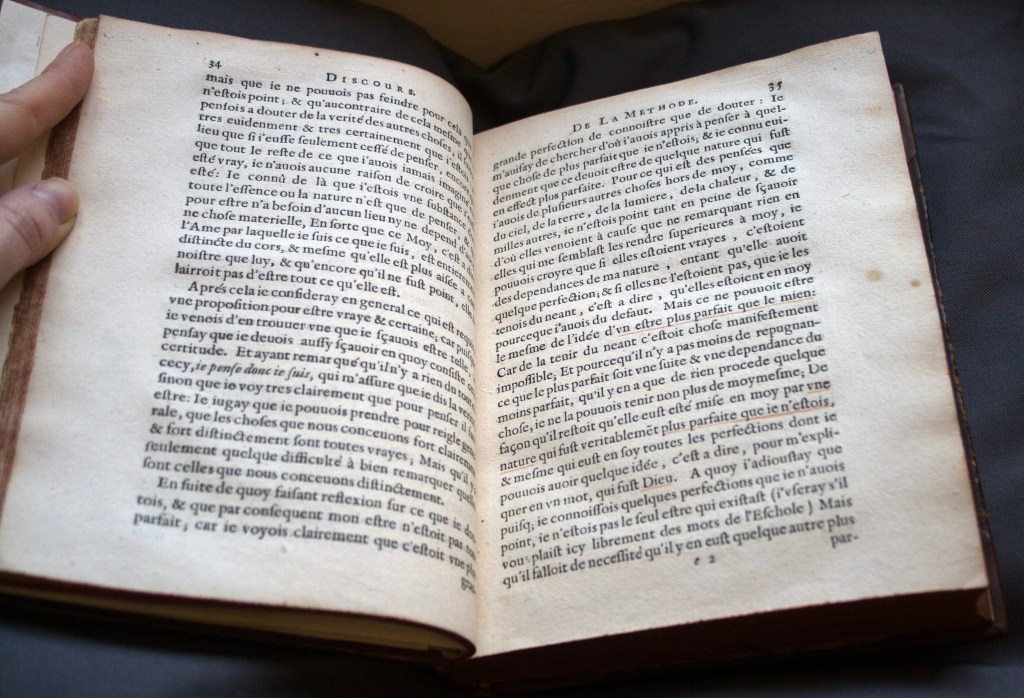
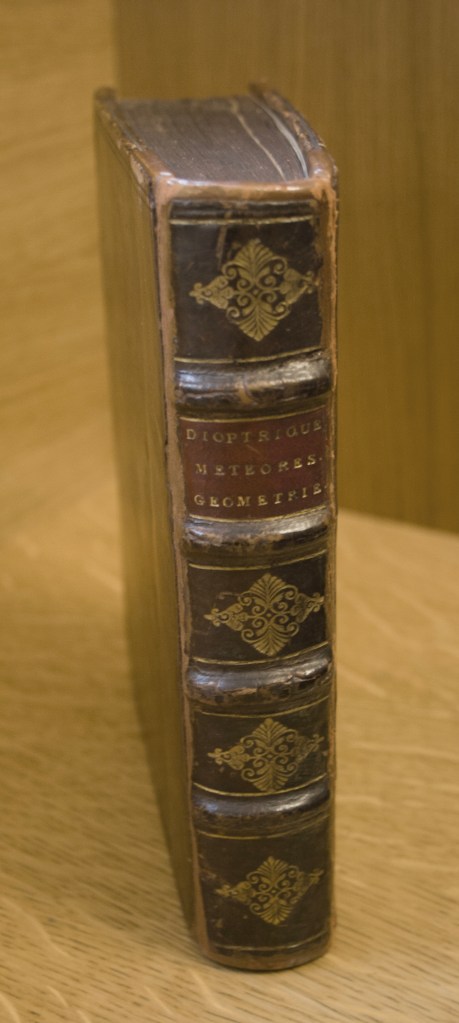
René Descartes, Discours de la méthode pour bien conduire sa raison et chercher la verité dans les sciences. Plus la dioptrique, les meteores et la géometrie, qui sont des essais de cette méthode, 1637. Westminster School’s Archive and Collections, WS-BUS-PRS/2/04
© Westminster School, for all the pictures of this page
Text: Dr Elizabeth Wells, Archivist and Records Manager, Westminster School
‘Cogito, ergo sum’ is arguably the most important and well-known statement in Western philosophy. It was written and published by French mathematician and philosopher René Descartes (1596-1650) in his 1644 volume Principles of Philosophy. The expression was however, first formulated and printed in French, seven years earlier, in Descartes’ Discours de la Méthode.
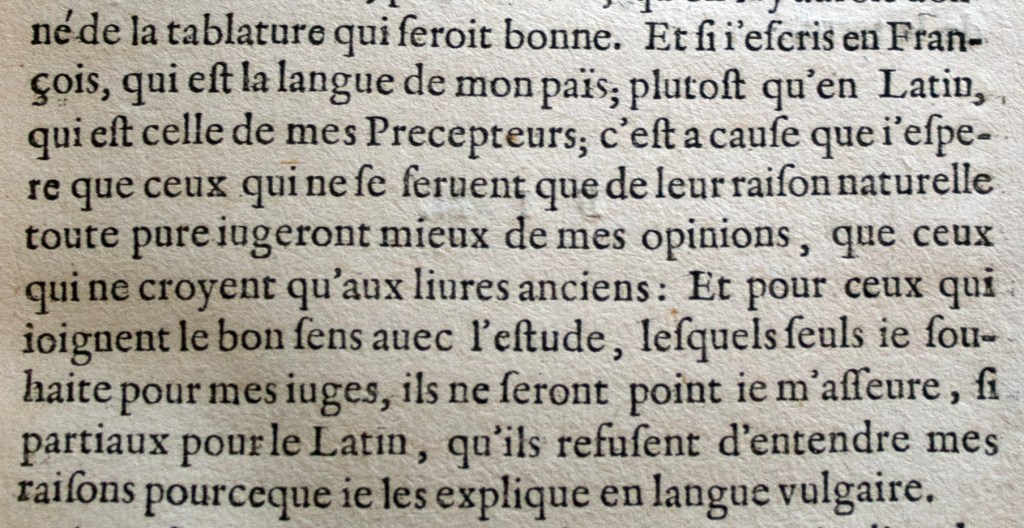
Descartes decision to publish in French is notable. Latin was commonly used in the seventeenth century to communicate ideas concerning mathematics and science to audiences across Europe. Isaac Newton’s famous Principia Mathematica was composed in Latin. However, Descartes deliberately chose to write in French, ‘the language of my country, in preference to Latin…because I expect that those who make use of their unprejudiced natural reason will be better judges of my opinions than those who give heed to the writings of the ancients only.’
Descartes was correct and international scholars were prepared to read his work in French. A copy of his Discours de la Méthode was purchased and used by the English mathematician Dr John Pell. When Pell died in 1687, his friend and Head Master of Westminster School, Dr Richard Busby, purchased his entire library. Dr Busby, who was a gifted linguist, read to his pupils from mathematical works after school. Although the school’s curriculum focused on classical languages, during his tenure a number of the boys at the school went on to have distinguished careers in mathematics and science, including Robert Hooke and Sir Christopher Wren, both early members of the Royal Society.
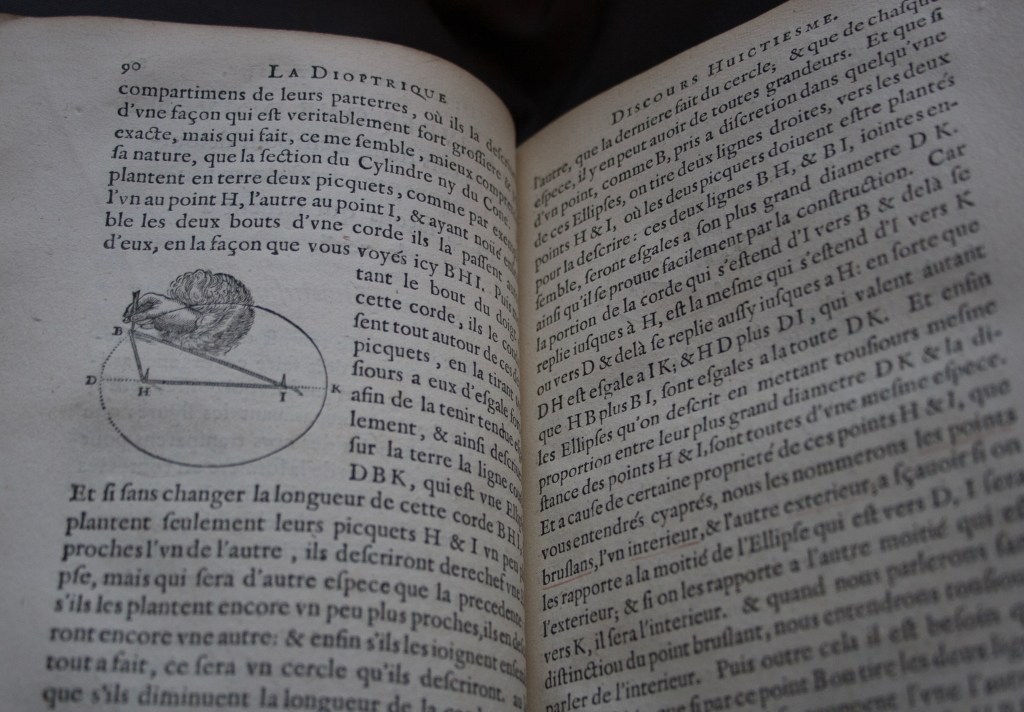
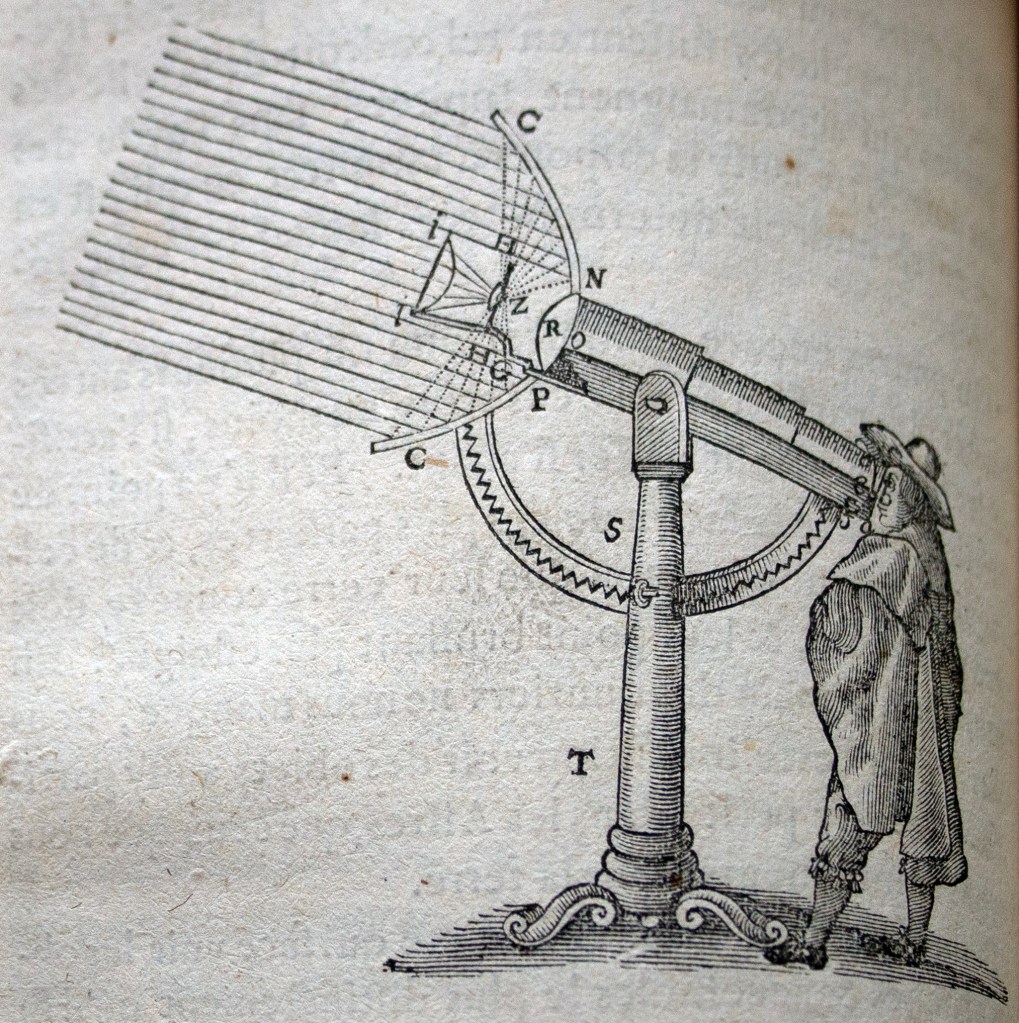
In Discours de la Méthode, Descartes first sets out his approach to scepticism, reason and observation as a basis for scientific understanding. His ontological argument for the existence of God, which stems from his first philosophical principle: ‘Je pense, donc je suis’, is set out in this section. Many of our pupils are surprised that John Pell, who often annotated and underlined passages in his books, did not choose to highlight this phrase! Appended are three short treatises on light and optics, meteorology and geometry – all of which made important contributions to mathematical and scientific understanding. This volume, one of our most valuable rare books, has been much appreciated by the pupils of Westminster School for the past 300 years and they continue to learn about Descartes to this day.
 LES AMIS DU PATRIMOINE EUROPÉEN