
Camden Place
Chislehurst, United Kingdom
www.chislehurstgolfclub.co.uk
🇫🇷 🇬🇧
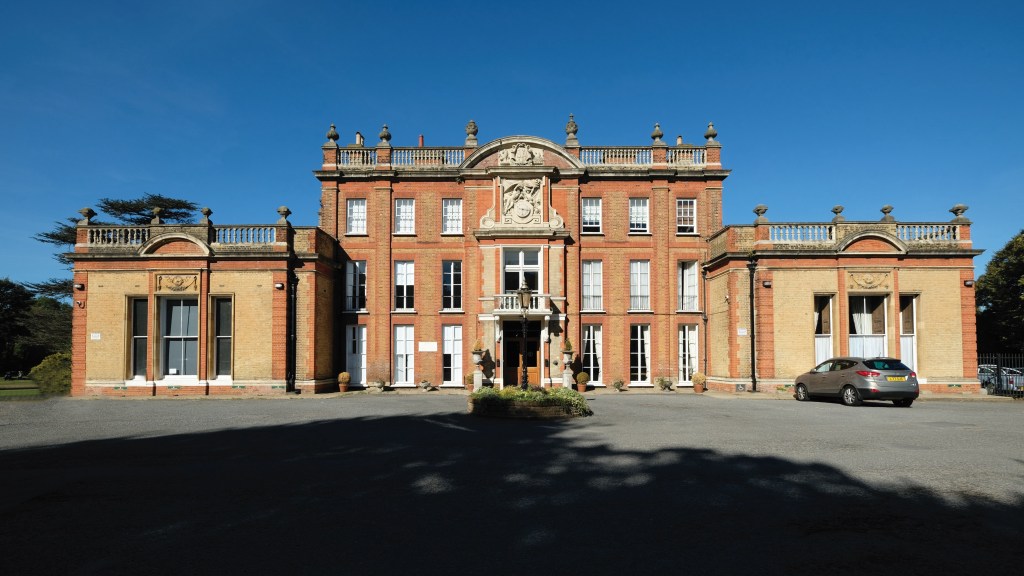
Camden Place © Chislehurst Golf Club
Texts: Angela Hatton, Camden Place House and Heritage Committee.
Just 12 miles from central London, tucked away in a corner of Chislehurst, is a grand house with a strong and perhaps surprising link to European history. The Grade ll* house was the last home of Emperor Napoleon lll and his son, the Prince Imperial, the man born to be Napoleon lV. With their deaths the possibility of a Bonaparte revival and a 3rd Empire for France also perished. Napoleon, the first elected President of France and its last Emperor, died without abdicating and our copy of his death certificate proclaims his occupation as ‘Emperor of the French’.
Camden Place’s history dates from the 1600’s when antiquarian William Camden built a house on the site. In 1717 his name was taken for a new country house built on the current footprint of Camden Place and given the name Camden House to link it to the famous Elizabethan scholar, buried in Westminster Abbey. In 1760 the house was bought by Charles Pratt, a radical lawyer and politician who became Lord Chancellor and took the name Lord Camden of Camden Place. This was considered outrageous at the time as it was unprecedented for anyone to take another’s name when ennobled. Lord Camden worked with architects George Dance and James ‘Athenian’ Stuart to turn a country house into a Georgian mansion. Lord Camden was a great supporter of the Americans’ right not to be taxed without representation’. As a result, some 32 towns and cities in America were named Camden after him. Globally, from Camden Town in North London to Camden in New Zealand, over 50 places are linked by name to this house in Chislehurst .
In the early 1860’s the house was purchased by Nathaniel Strode for £30,000. By 1870 the house had been transformed from Georgian mansion to French chateau and was certainly fit for Imperial residents. But how the French Court in exile ended up in Chislehurst is still a cause for speculation. Britain has a long history of opening its doors to political exiles from France. In the case of the Imperial family their close friendship with Queen Victoria made their welcome even warmer. This would be Napoleon’s third period of exile in England and he knew the country well. He would also be only too aware of the political volatility in France and the wisdom of being prepared with a possible bolt hole should it be required. It seems he visited Camden Place during one of this early periods of exile. Certainly, he had a romance with a young debutante Emily Rowles who was born at the house in 1823. Strode had known the young Prince Louis Napoleon during his second exile in the 1840’s. He was trustee for an actress, Harriette Howard. Howard became a long-term mistress of the Prince. She helped finance the political activities leading to him being elected President and she followed him to Paris – setting up home nearby and bringing up 2 (of his reported 11) illegitimate children. Between 1860 and 62 Strode received some 900,000 francs from the French Civil List. The house was transformed to the highest standard. Much greater than would be expected in a property of its size. French and Flemish art and artefacts decorated the house, its main gates came from the French Exposition in 1867 and a new dining wing was clad in the exquisite panelling from the Chateau de Bercy.
Camden Place was offered to the Empress as soon as she and the Prince Imperial arrived in England. This was not simply a home for an exiled family, it rapidly became the centre for the French Court in exile. Supporters, friends and staff made their way to Chislehurst, a French flag flew over the house and in March 1871 the Emperor, Napoleon lll was released from prison and joined his family. Visitors including Queen Victoria, leading politicians and clergy made their way up the hill from Chislehurst station. There were spies watching the house from a windmill on the common and there were plots and plans for a Bonaparte return. But Napoleon was a very sick man, suffering from bladder stones. The Prince Imperial had not reached his majority and so the strategy was to wait and watch events in France. In the mean-time the Prince Imperial was completing his studies as a student at the Royal Military Academy in Woolwich. He did well at his studies , graduating 7th in his class.
Napoleon died at Camden Place, following unsuccessful surgery to remove the bladder stones that had plagued him for years. This was just 20 months after his release as a prisoner of war, following France’s defeat in the Franco Prussian War. The Prince Imperial, his only legitimate son died just six years later, in British uniform whilst acting as an observer in the Zulu Wars. Two huge funerals were held in Chislehurst – royal in all but name and attracting tens of thousands (some claim up to 200,000 ) of French and British mourners. Both men were at first laid to rest in the small Catholic Church of St Mary’s.The Empress Eugenie, unable to acquire land for a mausoleum next to the church, left the area in 1881 for Farnborough Hants where she had an Abbey built and the bodies were moved in 1889.
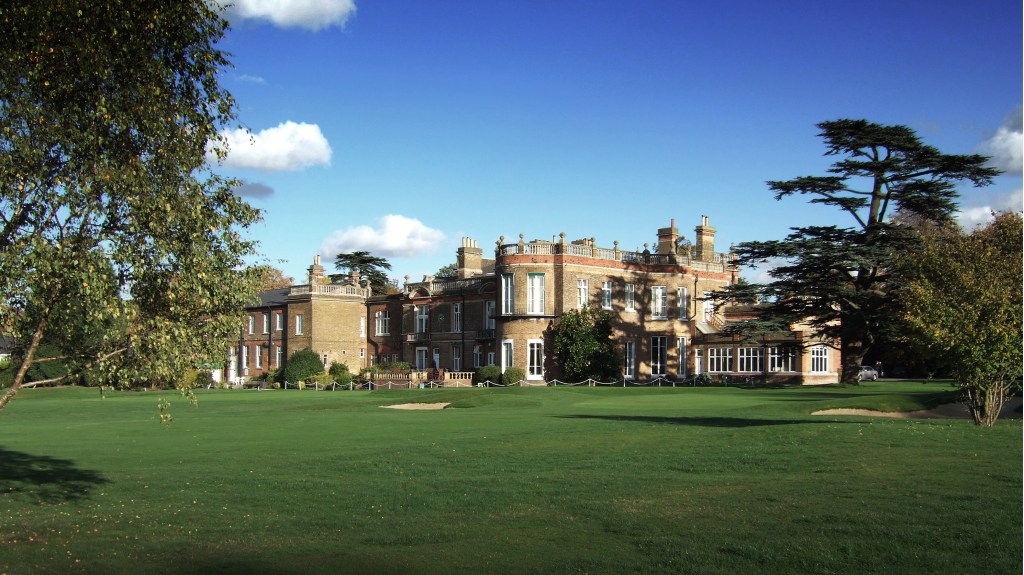
Camden Place © Chislehurst Golf Club
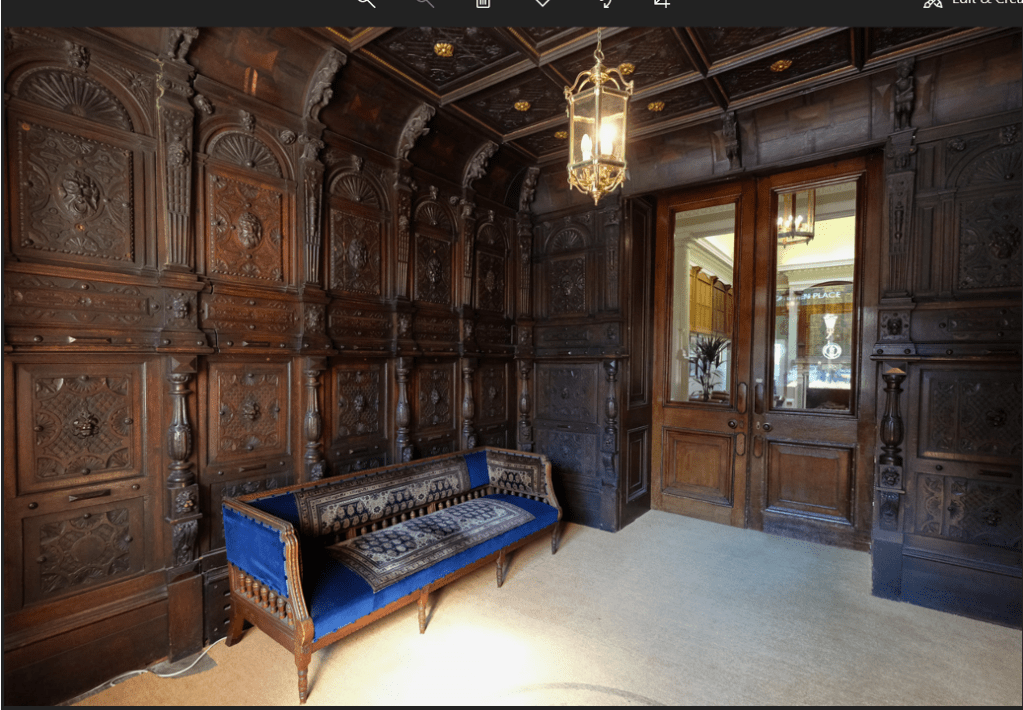
The Entrance, Camden Place © Chislehurst Golf Club
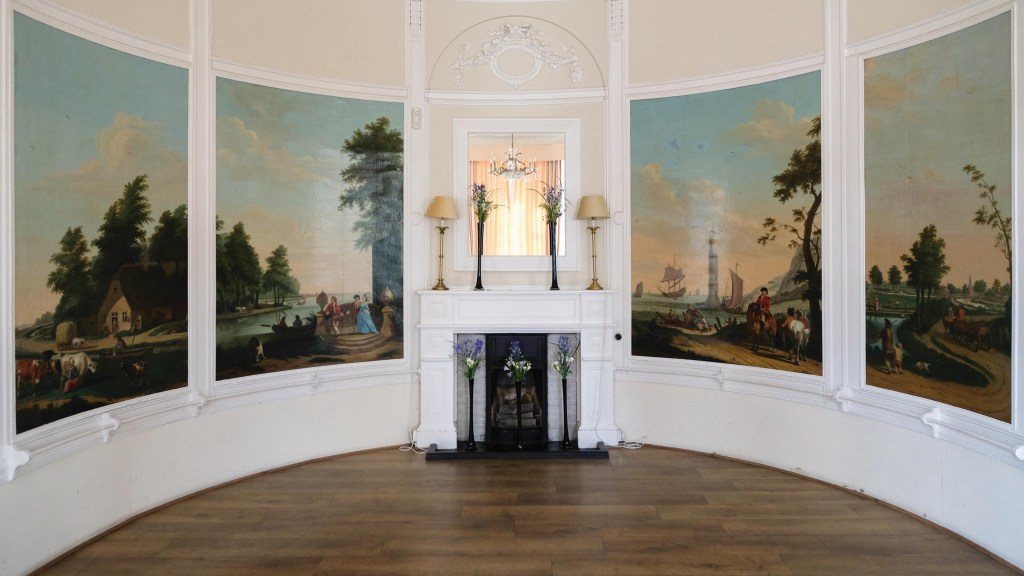
The Oval Room, Camden Place © Chislehurst Golf Club
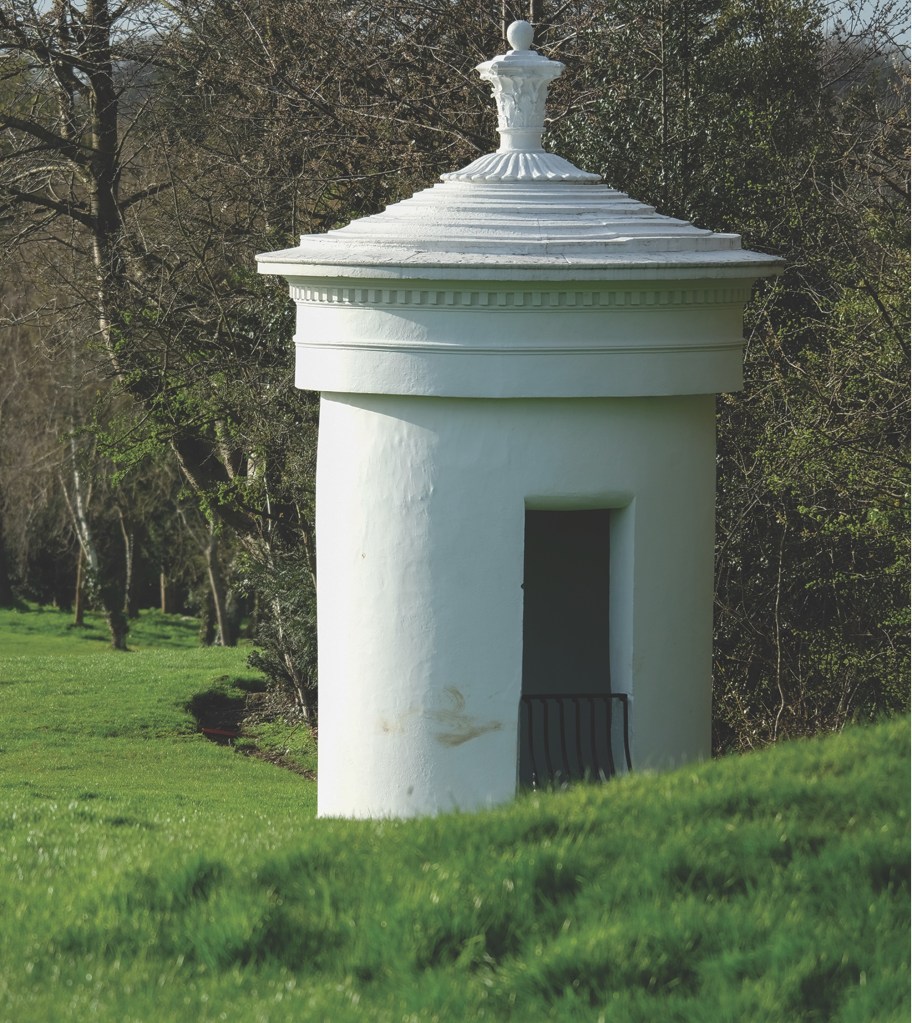
James « Athenian » Stuart’s folie in the park, Camden Place © Chislehurst Golf Club
Empress Eugenie’s bust
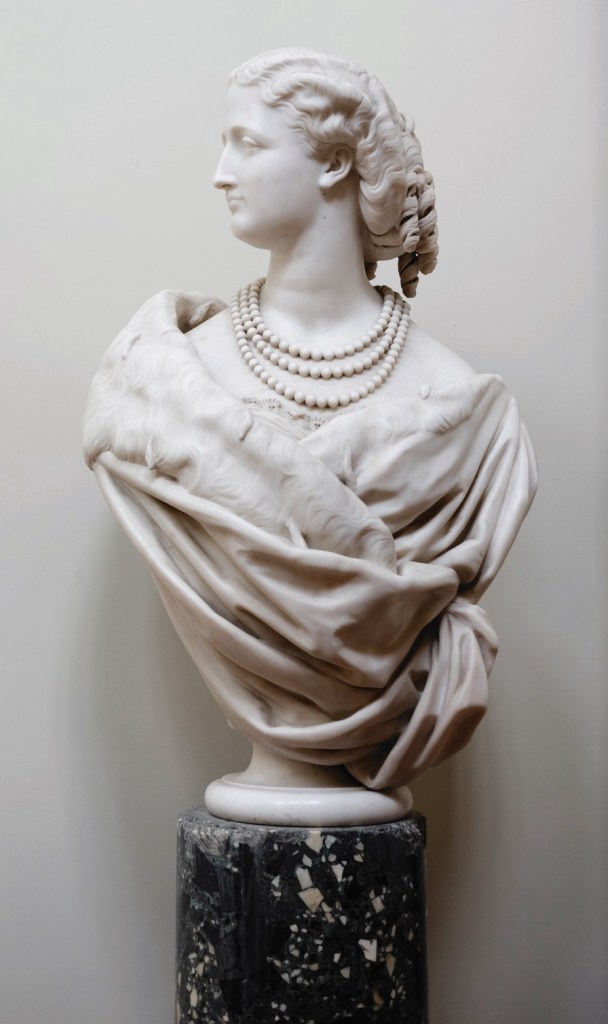
Empress Eugenie’s bust © Chislehurst Golf Club
The bust of the Empress stands on the magnificent cantilevered staircase of Camden Place. The sculptor was Samuel Adam-Salomon (9 January 1818 – 28 April 1881). The Empress was the most powerful woman in Europe. Even her close friend Queen Victoria had to work through Parliament. After the birth of her only son, the Prince Imperial, she was automatically Regent whenever Napoleon was absent. And so, after the defeat of France by Bismark at Sedan it was Eugenie who was involved in negotiations. Spanish born Eugenie de Montijo was of a noble but not royal family. A feisty red headed beauty she was a strong Catholic and very intelligent. An early supporter of women’s rights she was actively involved in influencing the social policies that modernised France in the 2nd Empire. The extravagance of their court is often criticised but it was key to putting France and French fashion on the map globally boosting both her reputation and exports.

The Staircase, Camden Place © Chislehurst Golf Club
The panelling in the Dining room
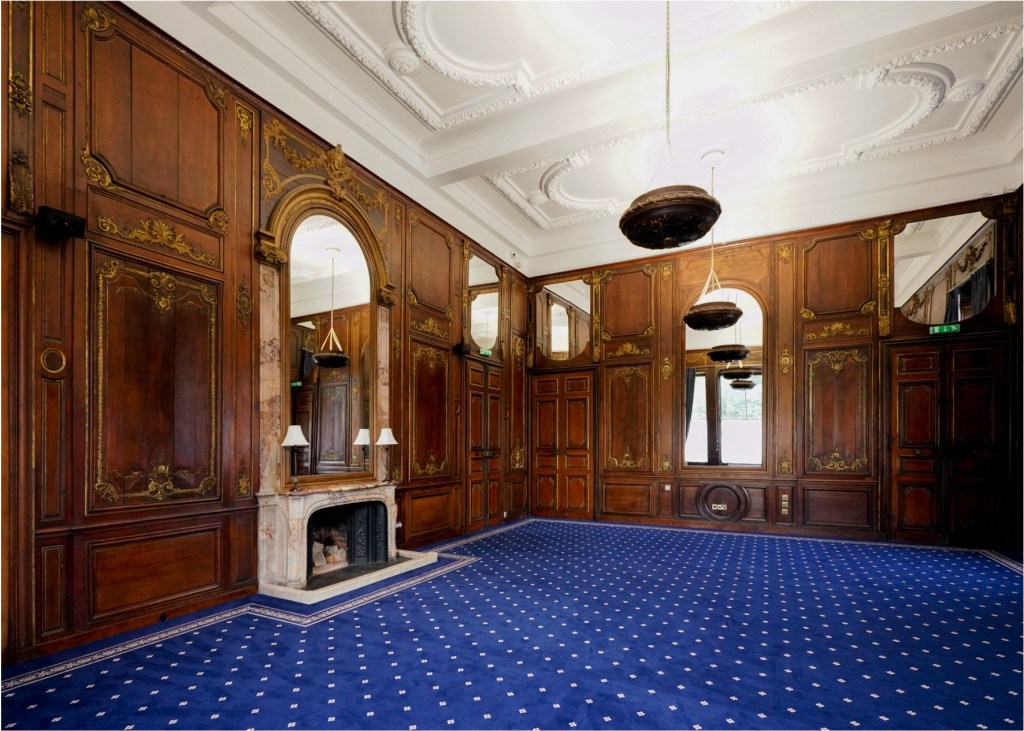
Former Dining Room and its panelling, Camden Place © Chislehurst Golf Club
The panelling in the dining room came from the Château de Bercy – located just outside Paris, built by François Le Vau for Charles-Henri I de Malon de Bercy in 1658. His successor, Charles-Henri II de Malon de Bercy who was superintendent of finances, commissioned sculptors employed on royal buildings to modernize the château’s furnishings in 1713-14. Sadly, urbanisation and the development of the railroad meant it had to be dismantled in 1860 but even then, this caused something of an outcry. The craftsmanship of its rooms was recognised as world class. As a result of its importance, records were created to capture the grandeur of the rooms and steps taken to track the destination of the interiors. So, the journey of the Camden Place panels from France to Chislehurst is surprisingly well documented. Before the demolition, the Nikolaÿ family commissioned the architect Joseph-Antoine Froelicher to produce a watercolour record with drawings of many rooms. In a series of sales conducted in 1861, the furnishings and grand interiors were all removed and sold. The Grand Cabinet on the first floor panelling was purchased for 12,000 France by the Marquis of Hertford. Empress Eugenie bought panelling from a ground floor room for her sister, paying almost four times as much. [The wall panelling acquired by Hertford included four overdoor paintings by François Desportes. The paintings augmented the Marquess’s rich collection of French eighteenth-century art, while the boiserie was presumably sold around 1862 to Nathaniel Strode. Strode had the panels installed in the dining room of Camden Place.] The paintings are now part of the collection of the Musée de la Chasse et de la Nature in Paris.
The Prince Imperial’s Monument

The Prince Imperial Monument, Prince Imperial Road, Chislehurst
© Thomas Ménard, this photo and the next ones
‘While the splendid boulevards and avenues of present day Paris and much of the city’s architecture, implicitly memorialise the third Napoleon, it is left to a modest back road in a leafy London suburb to commemorate the young man who might have become the fourth.’ John Bierman, Napoleon III and his Carnival Empire.
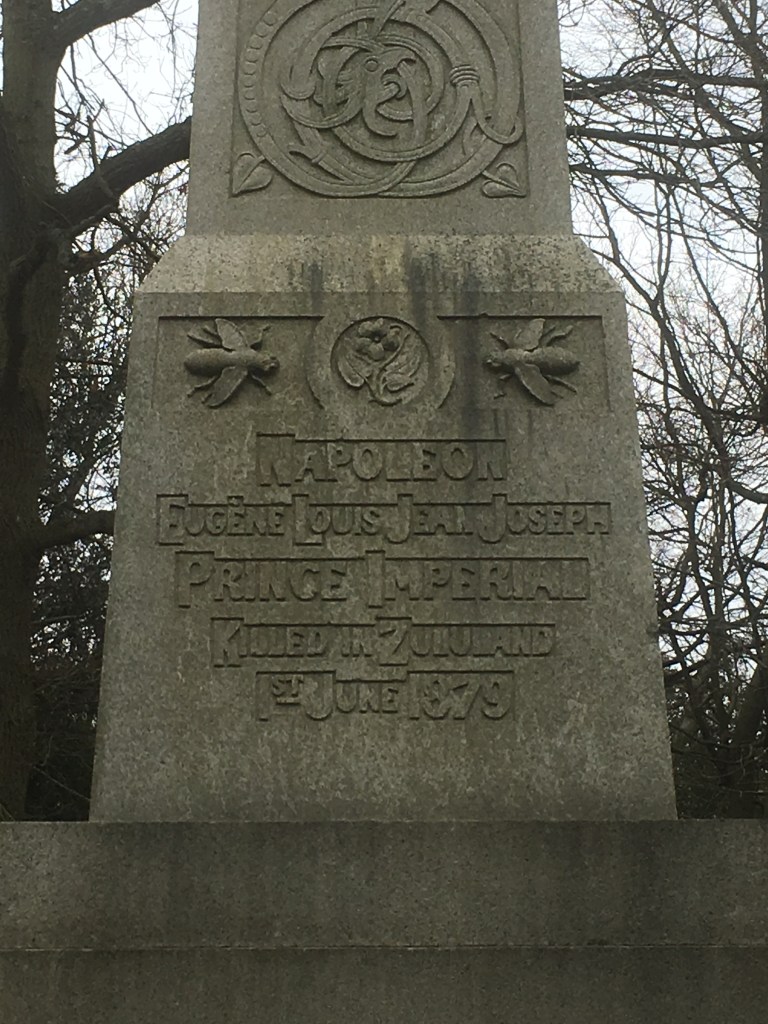
Two memorials to the Prince Imperial were erected in Chislehurst. The Prince Imperial Monument, on the Common opposite Camden Place was erected in 1881, to a design by Edward Robson. It is a large Celtic cross inscribed on one side ‘Napoleon Eugène Louis Jean Joseph Prince Imperial killed in Zululand 1st June 1879’ and on the other, using words from his last will and testament ‘I shall die with a sentiment of profound gratitude to Her Majesty the Queen of England and all the Royal Family, and for the country where I have received for eight years such cordial hospitality – in memory of the Prince Imperial and in sorrow at his death, this cross is erected by the dwellers of Chislehurst 1880‘. The monies for this memorial came from a public collection.
The second memorial lies in the Roman Catholic church of St Mary, Crown Lane, an effigy of the Prince in military uniform, with violet emblems and the golden Bonaparte bees.


 LES AMIS DU PATRIMOINE EUROPÉEN