
Lamport Hall
Lamport, United Kingdom
www.lamporthall.co.uk
🇫🇷 🇬🇧

Lamport Hall, John Webb’s façade © Lamport Hall Preservation Trust Ltd.
This contribution has been published with the support of Historic Houses.
www.historichouses.org
Lamport Hall
Text: Eleanor Carter, Head of Revenue Development, Lamport Hall Preservation Trust
Developed from a Tudor manor house, architecturally the hall has been worked on by Smith of Warwick and William Burn but is best known for its John Webb classical frontage.
The Hall’s fine rooms, including the High Room of 1655 and 18th century library, are filled with a wealth of outstanding furniture, books, china and paintings collected by the Isham family. Most were bought during the 3rd Baronet’s Grand Tour of Europe, in the 1670s. The first floor has undergone lengthy restoration, allowing further paintings and furniture to be displayed.
The ravages of two world wars and economic depression meant that the twentieth century was not kind to many of Britain’s country houses. At different times during the last century Lamport Hall has been a family home, divided into flats, a hunting box, a country club, a home for the Northamptonshire Records Office, a British and Czech army base and an Italian prisoner of war camp. Years of poor maintenance resulted in an outbreak of dry rot which, during the 1970s, saw large sections of the house gutted.
The Isham family lived at Lamport for over 400 years, until Sir Gyles Isham, the 12th Baronet, died in 1976. In his will he bequeathed the Hall, with its contents and Estate, to the Lamport Hall Preservation Trust which he set up to carry on the lengthy restoration programme of the hall, environs and estate, ensuring Lamport’s survival for the enjoyment of visitors and as a centre of culture and education.
The Lamport Hall Preservation Trust is a charitable organisation, established for the public benefit and controlled by a governing body of Trustees.
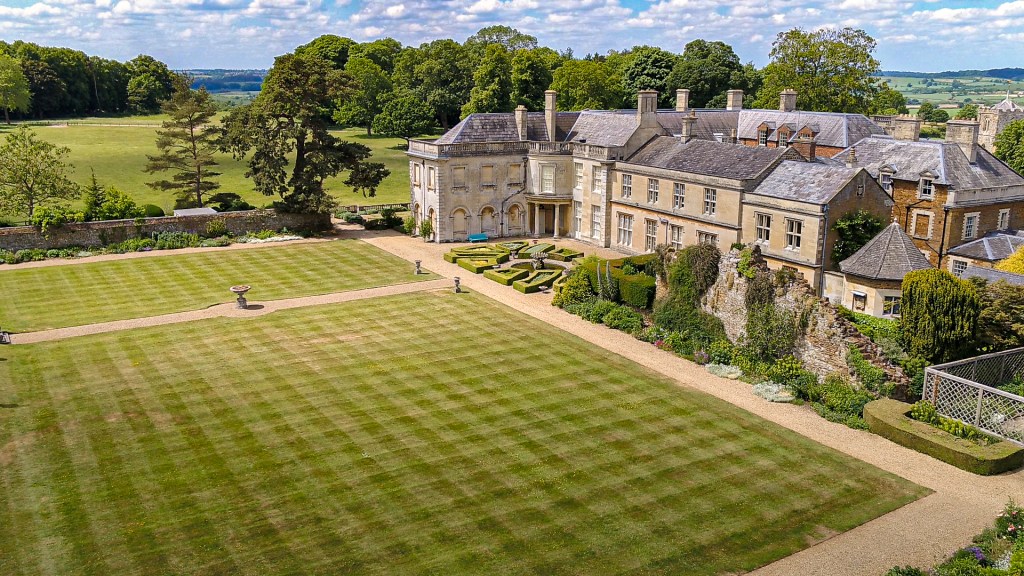
Lamport Hall and Sir Charles Isham’s rockery © Lamport Hall Preservation Trust Ltd.
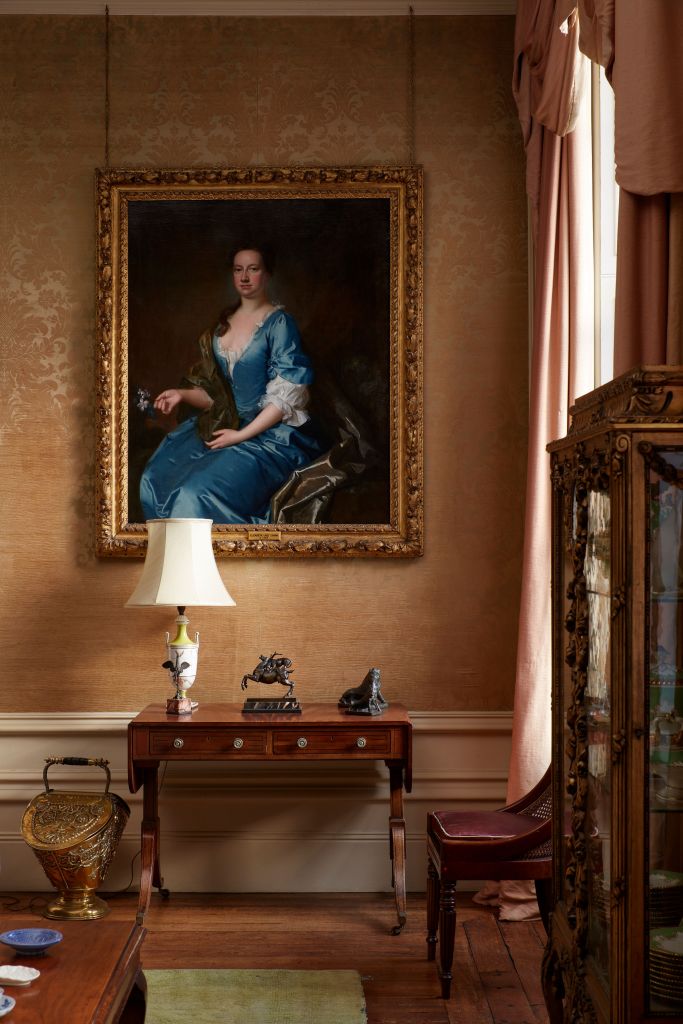
Lamport Hall, the Drawing Room © Lamport Hall Preservation Trust Ltd / Matt Clayton.
Pair of Neapolitan Cabinets
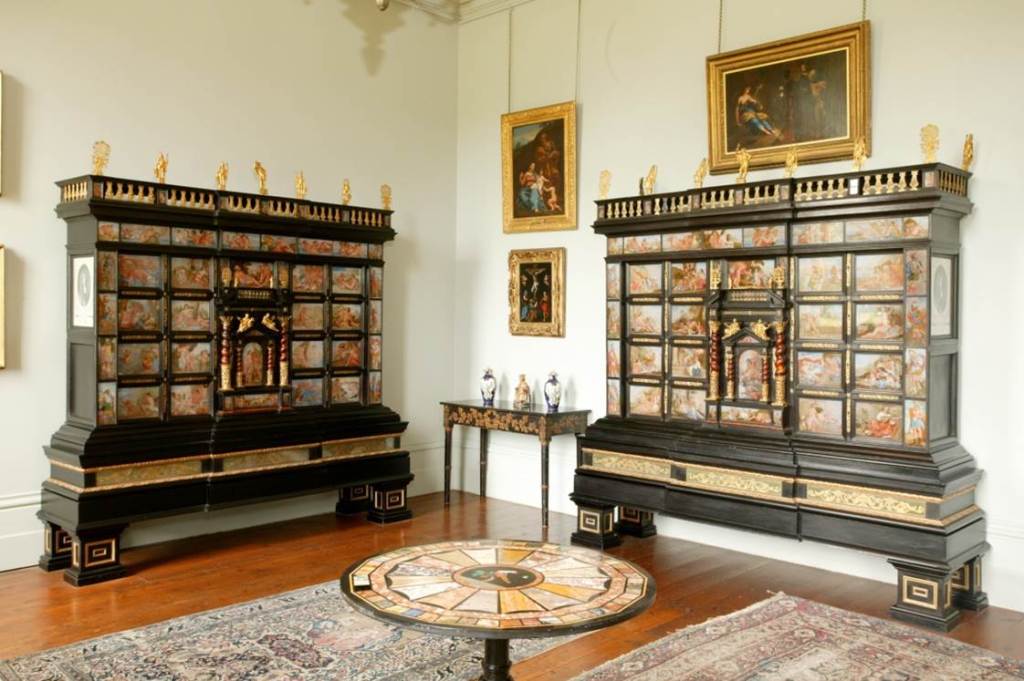
Pair of Neapolitan Cabinets (2.1 m x 2.06 m x 0.52 m)
Ebonised wood, Verre Églomisè, tortoise shell and gilt brass mounted cabinets on stands
Acquired by Sir Thomas Isham (1656-1681) in 1677. © Lamport Hall Preservation Trust Ltd
Text: Conny Bailey, Art historian
The pair of Neapolitan grand cabinets which Sir Thomas Isham acquired during his stay in Naples in 1677 exemplify a distinctive furniture craftsmanship particular to that location. They are remarkable for their reverse-painted glass panel inserts, a distinctive decorative feature unique to Neapolitan workshops and not replicated elsewhere in European cabinet-making. In their overall dimensions the Lamport cabinets occupy a unique position in the history of their genus.
The cabinets’ breakfront form comprises eight drawers arranged symmetrically to either side of the central aedicule, part of which serves as a ‘secret door’ and sits above another, shallow drawer. When opened, the secret door reveals an internal arrangement of nine further drawers. The aedicule consists of two pairs of tortoiseshell barley-twist columns with gilt-bronze base caps and capitals supporting an entablature and pediment surmounted by two reclining gilt-bronze beneath a short gallery. The glowing warmth of the tortoiseshell underlaid with gold leaf and the gilt bronze keyplates, figurines and finials provide a rich and lustrous contrast to the opaqueness of the reverse-painted scenes and the ebonised wood.
Forty-nine reverse-painted glass panels decorate each cabinet. Reverse-painting on glass is a technique where colour is applied to the back of a glass piece but viewed from the front. It requires the artist to start with the highlights and work into the background in an exact reversal of the traditional easel painting process. Originally executed in a combination of lacquer paint underlaid with metal leaf (Verre Églomisè) to imitate the effect of enamelling, the technique has been used since Roman times to enhance precious objects such as glassware, caddies, boxes, jewellery, furniture decorations and paintings. During the second half of the seventeenth century, it became more common for thin layers of pigmented paints to be used to create more painterly, pictorial effects which relied on a blackened or charcoal-coloured piece of card underlay to make the design fully visible to the viewer. The glass panels at Lamport are painted using glaze, semi-opaque and opaque colours applied in some instances using a wet-on-wet technique, whereby a new layer of paint is applied over a previously applied, still-wet layer of paint. The underlay can also be seen in some panels as a blue-grey background where flakes of paint have become detached from the glass.
The panels depict classical mythology and Bacchanalian scenes, with the side panels featuring legendary kings and the upper gallery adorned with medallion portraits of Roman emperors. This visual outer frame of historical and mythological ‘worthies’ represents the codification of ancient virtues associated with successful leadership and model societal conduct.
The cornice scenes, together with the remaining panels on drawers and the central section comprise a range of themes taken from literature, classical mythology and Bacchanalian scenes set in a version of Arcadia. Arcadia has long been a favoured theme in the visual arts and literature. Drawing on Virgil, medieval European literature adopted Arcadia as a symbol of pastoral simplicity. The focus of the Renaissance on classical antiquity saw a resurgence of Arcadian scenes which became synonymous with any idyllic or paradisiacal place where life was in harmony with nature, virtuous and untainted by civilisation. When combined with the imagery of emperors and worthies, the panels’ iconographic programme promotes an overall vision of a virtuous and exemplary life. Educated observers would have understood the pictorial programme of the cabinets as emphasising their owner’s honourable conduct, education and public reputation, a moral framework against which public actions could be evaluated.
The painted scenes show the use of early mass-production techniques to speed up the creative process. There are a number of glass panels where the same template has been used, such as the figure of a soldier appearing twice in different colours in the side panels of one cabinet. Similarly, the same reclining figure of Ceres, the goddess of agriculture and fertility, is depicted on both an outer and a secret drawer, executed by two different artists. Equally, a number of figure groupings have been copied from paintings by well-known artists such as Nicolas Poussin, Annibale Carracci and Iacopo Bassano via prints. Both the duplications and the use of existing artworks as templates indicate a rapid-paced market the workshops could only satisfy by cutting artistic corners.
The bespoke pedestal stands, unusual for this type of furniture, post-date the cabinets. Both are adorned with gilded mouldings on the body and feet, and feature three glass panels reverse-painted with a foliate pattern in black and gold with contrasting green infills created by layering yellow lacquer over a blue background. The presence of leaves forming C-scrolls and the juxtaposition of lacquer and pigment-based paint suggest their origin to be no earlier than the mid eighteenth century.
The cabinet sides each host an engraved portrait of Sir Thomas Isham, copies of a work by David Loggan, dated 1676. Of these, three are printed on paper while the fourth one is mirrored and cut into a metallic surface. It is likely that this is the original engraved plate used for printing the portraits. A pencilled inscription on one of the portraits dates the insertion to 1870.
According to the copy of the original bill displayed in the cabinet room the cabinets cost 250 ducats, with another 23 ducats 1 tari and 15 grani charged for packing and transport to the dockside. While Thomas Isham commissioned the cabinets personally during his stay in Naples, he did not wait for their completion. Instead, receiving the finished products, approving their quality and arranging for their payment and shipment to England fell to George Davies, the British consul in Naples. A letter confirming shipping arrangements and billing from Davies to Thomas Isham survives in the Northamptonshire Records Office, together with several personal letters which show Thomas’s concern for the safe arrival of his most treasured cabinets. The actual shipping date is not documented, but from letters Thomas sent home in August and September 1677 it is obvious that he is eagerly awaiting news of their safe arrival. That finally happened on 18 November 1677. However, it would be another two years before Thomas returned home to enjoy his most unique Grand Tour souvenirs.
NB: This text can be found in the book published for the 50th anniversary of Lamport Hall Preservation trust.
The Stag Hunt, by Joan Carlile
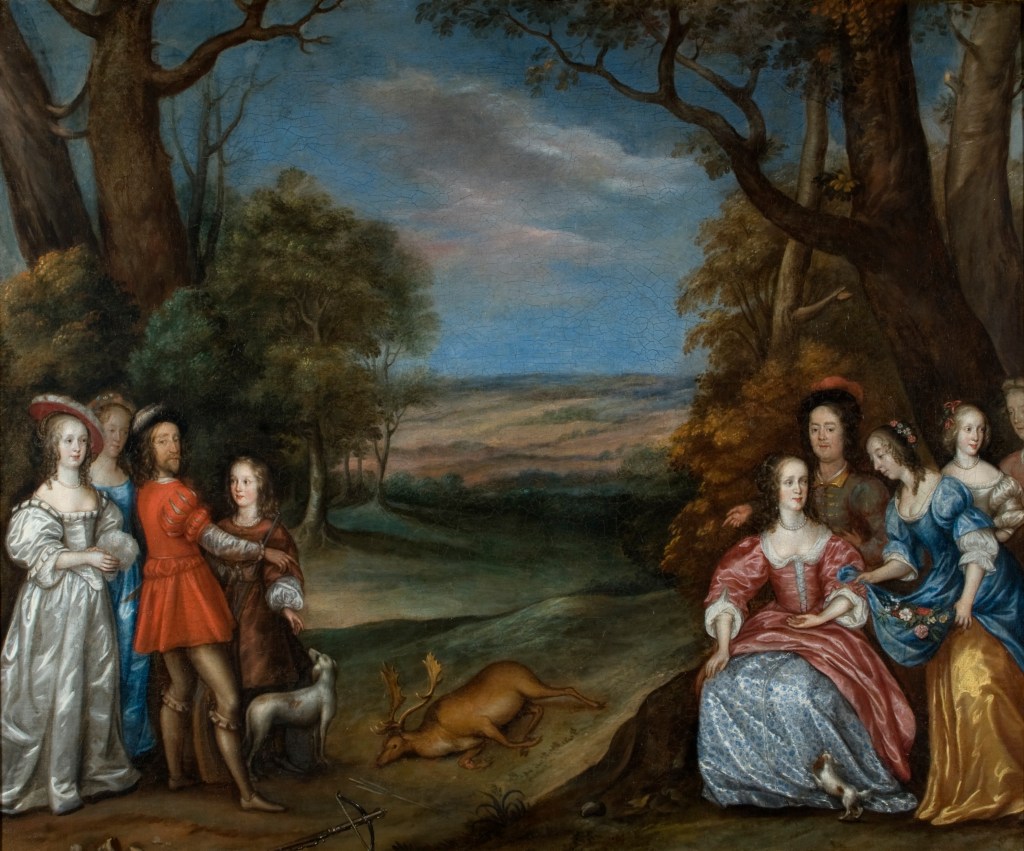
The Stag Hunt © Lamport Hall Preservation Trust Ltd.
Text: Jane Eade, Cultural Heritage Curator, The National Trust
Known as the Stag Hunt, one of the treasures of Lamport Hall is a small painting on wood that hangs in the Oak Room. An early example of a ‘conversation piece’, it was painted by one of the first documented female British artists, Joan Carlile (c.1606-1679).
Joan Carlile was born in London around 1606 to Mary and William Palmer, a Keeper of the Royal Park of St James and the Spring Garden. Although no evidence for her early years survives, Carlile may have been encouraged in her art by an uncle, Edward Palmer, an antiquary interested in painting who was living in London during her childhood.
Documentary records show her painting in her 30s, and probably long before. In 1625 she married Lodowick Carlile, a poet, playwright and close member to the King Charles. Within a few years he would become a Groom of the Privy Chamber to both their majesties and would remain particularly devoted to the Queen, Henrietta Maria, who was a notable supporter of his theatrical endeavours.
The Stag Hunt is thought to depict the artist herself with her family on the left, while on the right stands Sir Justinian Isham of Lamport, later 2nd Baronet (1611-1675) with a party of ladies.
The setting of the painting is Richmond Park, enclosed in 1637 by Charles I for hunting. The king appointed Lodowick Carlile one of two Keepers and the couple moved to the lodge at Petersham. Joan depicts them with their two surviving children, Penelope and James. Isham, a scholar and a royalist, stayed with the Carlile’s in Petersham in 1649/50 and the painting may well have been a gift from the artist to record his visit. He stands with an unidentified group of ladies and a young man. That the woman in front of him is seated, and wearing a loosely laced bodice, suggests that she may be pregnant. If it is Isham’s first wife, Jane Garrard, the portrait must have been painted in the summer of 1638 as Jane died in childbirth in March the following year. The sitter may, however, be Isham’s second wife, Vere Leigh (d.1704), whom he married in 1653.
The flowers being proffered to the seated woman echo a gesture in a portrait by Gerrit van Honthorst of George Villiers, 1st Duke of Buckingham (1592-1628) with his Family. Much copied, Carlile would almost certainly have known of it. Honthorst depicts Mary Villiers offering her pregnant mother the flowers she has collected and which her baby brother tries to grasp. At the time of Carlile’s painting Mary Villiers was Duchess of Richmond and Lennox, and it is not impossible that the inclusion of this gesture is a coded compliment to the Duchess, ‘The Illustrious Princess, Mary Dutchess of Richmond and Lenox’ to whom her husband Lodovick dedicated his 1638 play, The Passionate Lovers, performed with sets designed by Inigo Jones. The prologue, appropriately enough in this context, also speaks of his love of hunting: ‘Most here knows/This author hunts and hawks and feeds his Deer,/Not some, but most fair days throughout the yeer’. Carlile may also have had a portrait of the Duchess in her studio at her death.
The time of year must be August, the season for buck hunting, and it is evidently Lodovick himself, wearing the red of his royal livery, who has killed the quarry to which he and Isham gesture. Only Lodovick and Isham are shown facing the viewer, like principal actors in the wings, pointing to the deer in the centre. Hunting was the House of Stuart sport par excellence, and in the symbiotic relationship between the theatre and political expression it has been argued that perspective stages made the king, always the moral centre of court productions, ‘the physical and emblematic’ centre as well. The setting of the painting may well have been influenced by Jones’ set designs: like their vanishing point, Carlile’s placement of a dead buck centre stage can perhaps be read as a metaphor for the King’s interests.
The Stag Hunt speaks to a consistent theme in Carlile’s painting, which is her interest in setting. Heavily influenced by the portraits of Sir Anthony van Dyck (1599-1641), after establishing a studio in Covent Garden in 1653 Carlile painted a number of full-length portraits after van Dyck, of women dressed in white satin with a shawl of metal thread. Their detailed outdoor backgrounds appear to be drawn from nature and her own imagination, as well as visual memory, in order to create her own distinct interpretation of the Netherlandish passion for landscape. The Stag Hunt also speaks to Carlile’s ability to paint on a small-scale, most recently evidenced by the discovery of a luminous oil on copper of an unknown woman.
The presence of this work at Lamport would lead to ground-breaking research into this little-known painter by the 12th Baronet, Sir Gyles Isham (1903-1976), and historian Margaret Toynbee (1899-1987). In 1954 they published the first scholarly article about Joan Carlile, to which more were added, and to which historians remain indebted to this day.
Gyles Isham also edited the correspondence of Sir Justinian Isham with Bishop Brian Duppa, chaplain and adviser to King Charles I, and which provides a significant contemporary source for the artist’s life.
Joan Carlile continued as a painter throughout the Civil Wars and Interregnum and by her early fifties she was pre-eminent in a brief list of English women artists produced by the Royalist historian William Sanderson in his book on painting, Graphice: ‘And in Oyl Colours we have a virtuous example in that worthy Artiste Mrs. Carlile: and of others Mr[s] Beale, Mrs. Brooman, and to [sic] Mrs. Weimes.’
NB: This text can be found in the book published for the 50th anniversary of Lamport Hall Preservation trust.
The first gnome in Britain
Text: Eleanor Carter, Head of Revenue Development, Lamport Hall Preservation Trust
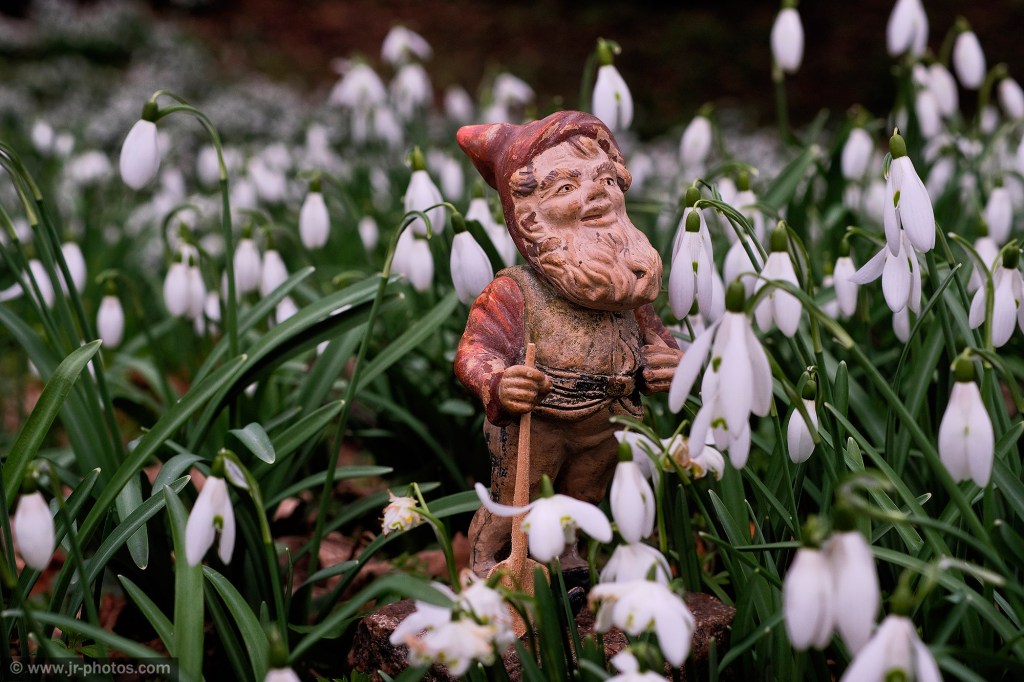
The Lamport Gnome © John Robertson, 2022.
Sir Charles Isham, 10th Bt, was a Victorian eccentric most famed for introducing the garden gnome to Britain. During a trip to Nuremberg, Sir Charles came across small ceramic figures which the miners took to work with them as good luck talisman. Sir Charles thought them most charming and brought back a selection to Lamport.
They started their life at Lamport as placeholders on the dining table when the Ishams hosted guests but Sir Charles’ wife Emily was not too keen on them and subsequently banished the little figures to the garden. Sir Charles then set about creating a small world for them to live in including a large rockery and alpine garden complete with miniature conifers and gnome-sized mines. He firmly believed that they came alive at night and even moved his bedroom so it overlooked the rockery; perhaps to monitor the mischief!
Sir Charles tended the rockery himself and was once given a small tip by a garden visitor who mistook him for a gardener. He had the coin framed with a note saying it was the only money he had truly earned. After his death, the family rumour is that his two surviving daughters shot the gnomes with air rifles as they had such a hatred for them. However, one gnome fell back into a crevice and was discovered in the 20th century. He still survives to this day and can be viewed in the Hall. He has lived an exciting life since with a trip to a gnome convention in New Zealand, an appearance at the Chelsea Flower Show with Alan Titchmarsh and a feature on CountryFile with Helen Skelton.
Sir Charles never intended for the rockery to outlive him so it is fascinating to think what he may have thought of coaches still pulling up to Lamport to view his work to this day…
 LES AMIS DU PATRIMOINE EUROPÉEN