Roskilde Cathedral
Roskilde, Denmark
www.roskildedomkirke.dk

West front of Roskilde Cathedral from a medieval street
© Roskilde Domkirke – Foto Sara Peuron-Berg
Text: Roskilde Cathedral.
Roskilde Cathedral, 1000 years of history
Roskilde Cathedral, located in the historic town of Roskilde, Denmark, stands as a testament to centuries of architectural and cultural significance. A masterpiece of Gothic design, this magnificent structure dates back to the 12th century and is a UNESCO World Heritage Site.
The cathedral’s soaring spires and intricate detailing capture the eye and imagination of all who visit. Its rich history is intertwined with that of the Danish monarchy, serving as the final resting place for 40 kings and queens, including some of Denmark’s most influential historical figures. The grandeur of the interior, with its ornate chapels and beautifully crafted tombs, reflects both the religious devotion of the past and the artistic prowess of the craftsmen who contributed to its creation.
Beyond its architectural marvels, Roskilde Cathedral has played a vital role in the cultural heritage of Denmark. The cathedral also stands as a place of worship and contemplation, inviting both locals and tourists to reflect.
Architecture
The Cathedral is a UNESCO World Heritage Site because of its unique mix of architectural styles added due to its function as a royal mauseolum. It’s also one of the oldest brick churches in Northern Europe and one of the first Gothic brick churches in the world.
UNESCO’s criteria for Roskilde Cathedral:
– Criterion (ii): Roskilde Cathedral is an outstanding example of the earliest major ecclesiastical building in brick in Northern Europe and had a profound influence on the spread of brick for this purpose over the whole region.
– Criterion (iv): Both in its form and setting, Roskilde Cathedral is an outstanding example of a North European Cathedral complex especially noteworthy for the successive architectural styles used in ancillary chapels and porches added in the course of the centuries during which it has served as the mausoleum of the Danish royal family.
Royal tombs
Royal funerals are poignant and solemn ceremonies that mark the passing of a monarch or a member of a royal family. These events blend tradition, history, and protocol, reflecting the cultural and social significance of the ruling dynasty. From the grandeur of the funeral processions to the intricate rituals and customs, royal funerals are steeped in symbolism and hold a unique place in the collective memory of a nation. Tombs and final resting places for royals hold historical and architectural significance. Often, they become sites of remembrance, drawing visitors from around the world. The architecture and design of these tombs may reflect the individual’s personality, achievements, and contributions, serving as a lasting tribute to their legacy.
According to legend, Harold Bluetooth built the first church and was buried here. This is uncertain. As far back as the early Middle Ages, Roskilde Cathedral was a strategic partner in the fight for power. With Harald Bluetooth as the first church-builder, Sweyn Estridsen (died 1076) as the earliest king known to be buried in the church, Margrethe 1 (1353-1412) as one of the strongest monarchs and Christian 4 (1577-1648) as one of the most popular monarchs, a string of royal personalities have left their mark on the building. And as something quite unique, since the late 1500s, all Danish kings and – with only one exception – queens have found their final resting place in Roskilde Cathedral. The cathedral has been a royal burial church for 1000 years and this tradition will continue with Her Majesty Queen Margrethe 2. As something quite unique, you can sit on the bench that covers the queen’s future sepulchral monument and enjoy the beautiful mediaeval frescoes above.
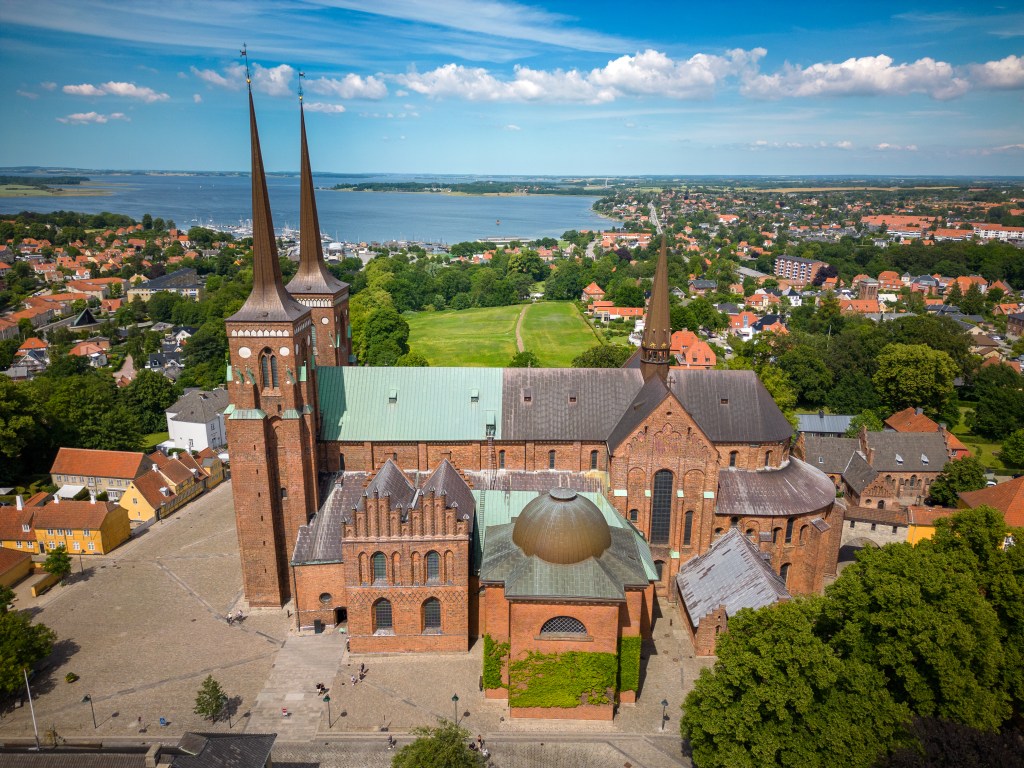
South side of Roskilde Cathedral
© Roskilde Domkirke – Fotograf Mik Dahl Storyflight
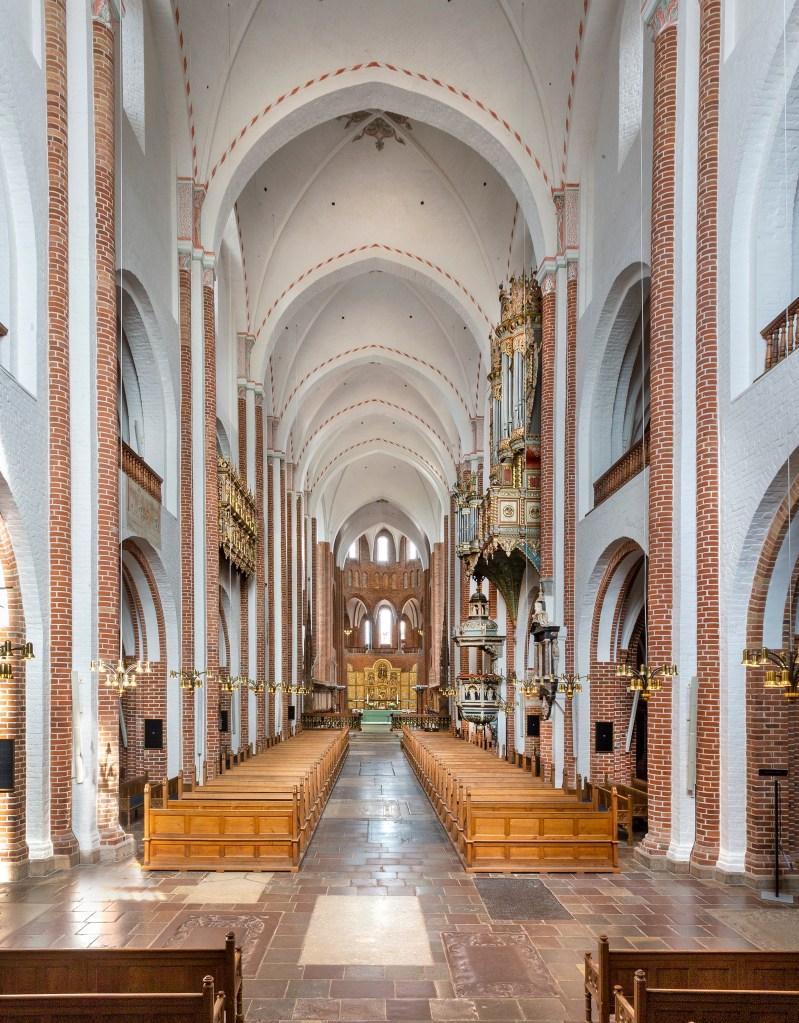
The nave of Roskilde Cathedral, towards the choir
© Roskilde Domkrike – Foto Henrik Wichmann
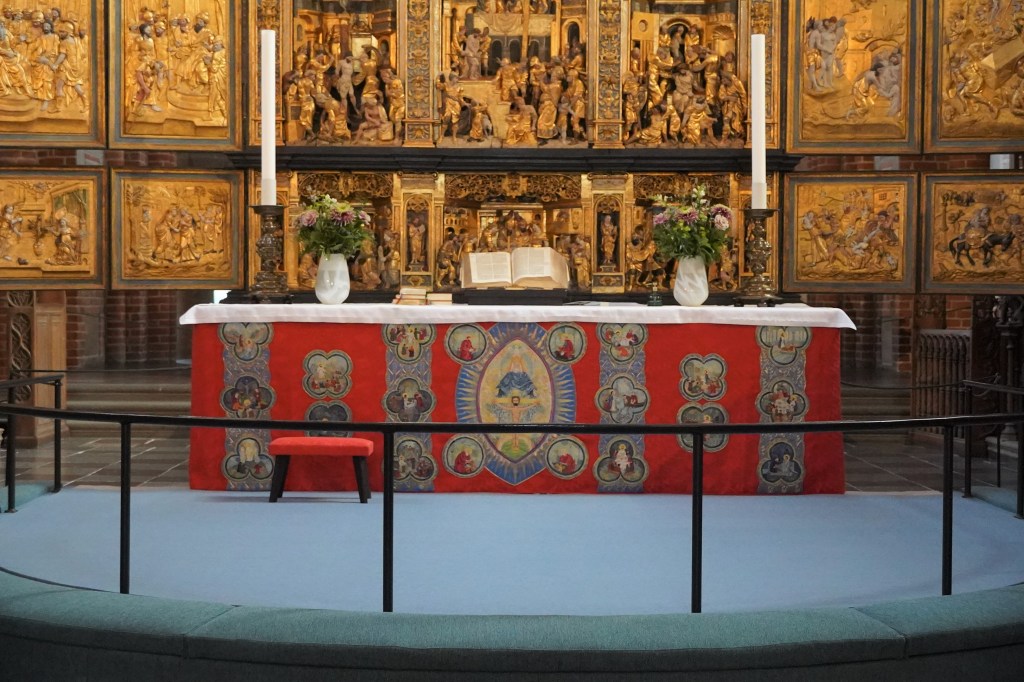
The Queens’ antependium, embroidered by Queen Ingrid and Queen Margrethe II.
© Roskilde Domkirke
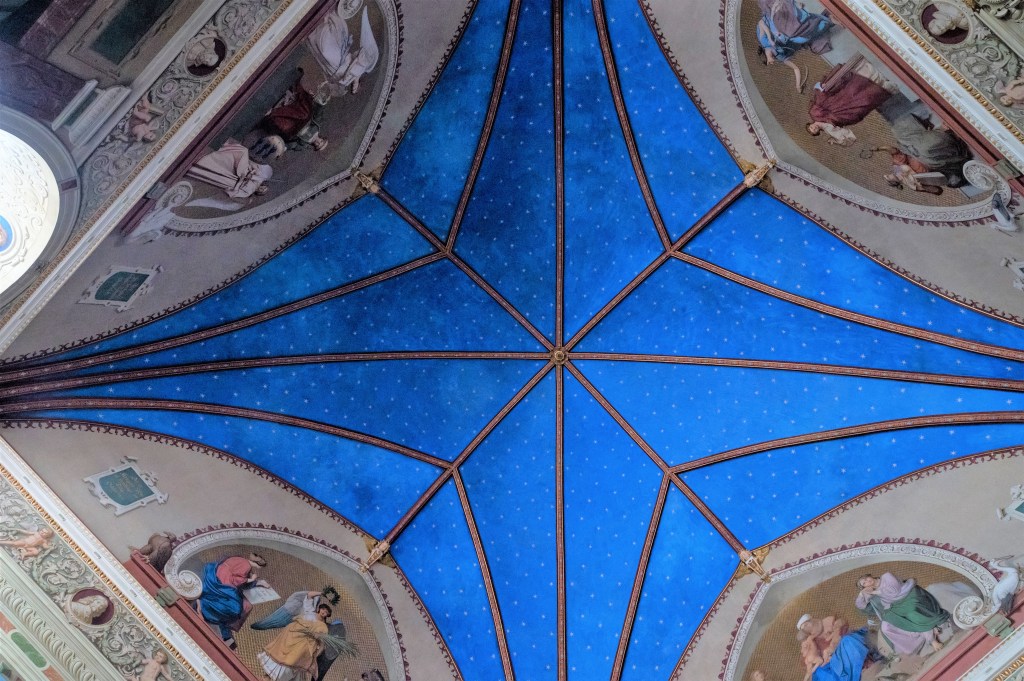
The blue vault of Christian IV’s Chapel
Voûte de la chapelle Christian IV
© Roskilde Domkirke – Foto ByCatalan
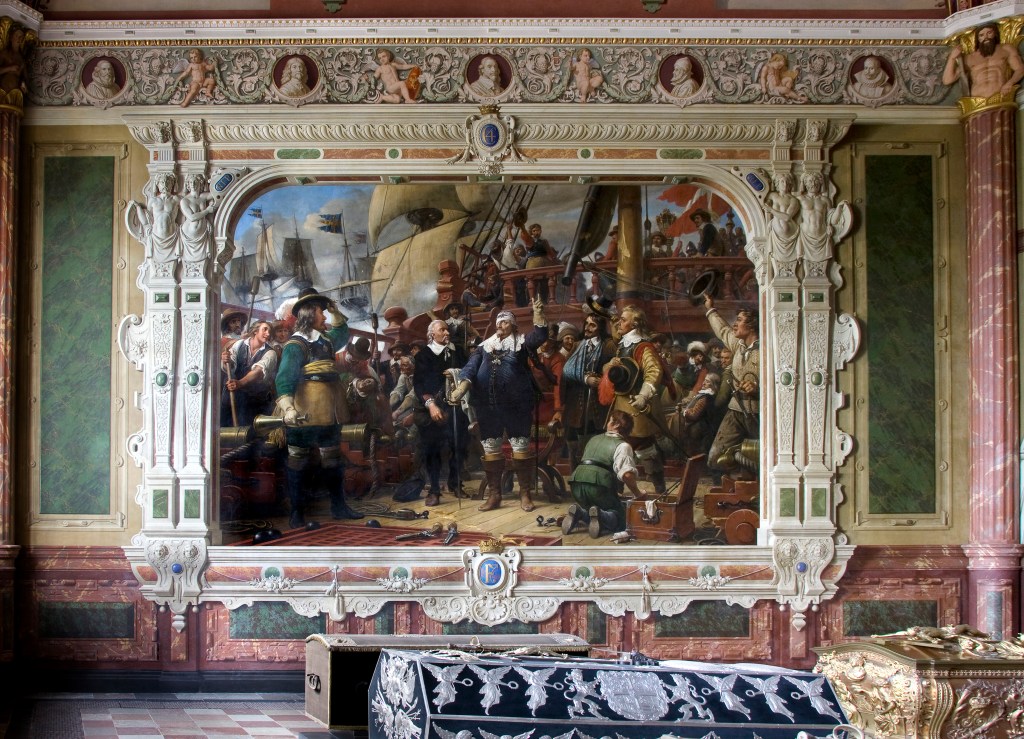
Christian IV at the Battle of Colberger Heide (1644), in Christian IV’s chapel
© Roskilde Domkirke – Foto Jan Friis
Three treasures of the Cathedral
The Organ

Central part of the organ
© Roskilde Domkirke – Foto Sara Peuron-Berg
The famous baroque organ in Roskilde Cathedral is known as the Raphaëlis organ. It has a unique, vintage tone, and is held to be one of the world’s finest organs. In the Middle Ages, music and singing were the prerogative of the priests. After the Reformation in 1536, church music became of central importance. In 1554, the organ was rebuilt by the Dutch organ builder, Herman Raphaëlis. In 1654, Raphaëlis’ Renaissance organ underwent a major rebuild in the new style of the time: Baroque. The organ has since been restored and rebuilt several times. The last major changes were made in 1988-91, where the 1654 organ was restored as much as possible. The organ therefore comprises elements from the Middle Ages, the Renaissance and the Baroque.
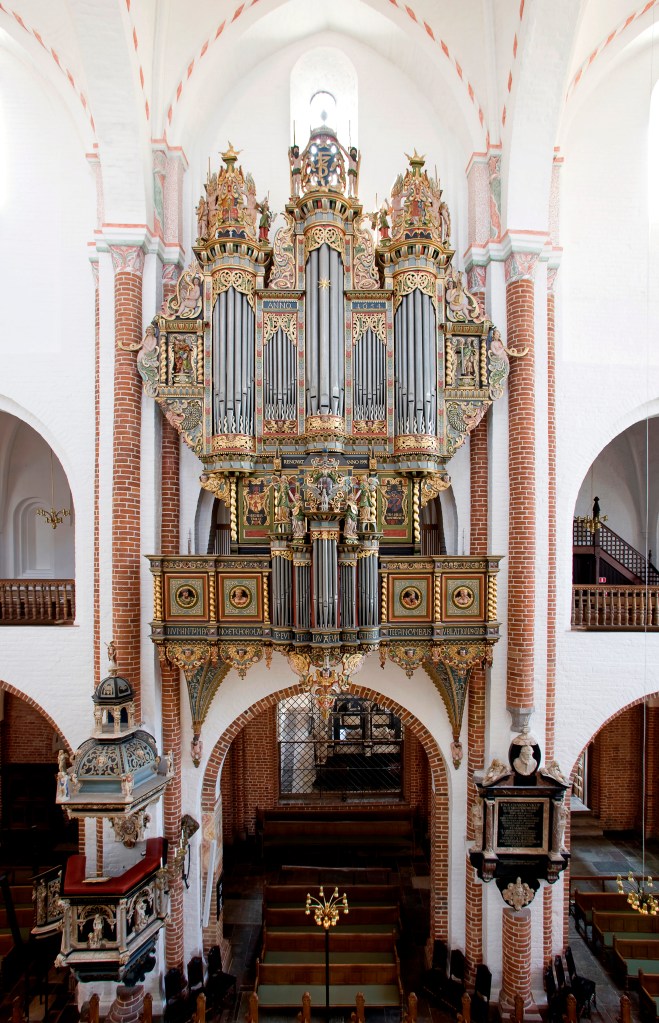
The Raphaëlis Organ
© Roskilde Domkirke -Foto Jan Friis
Sarcophagus of Queen Margrethe I
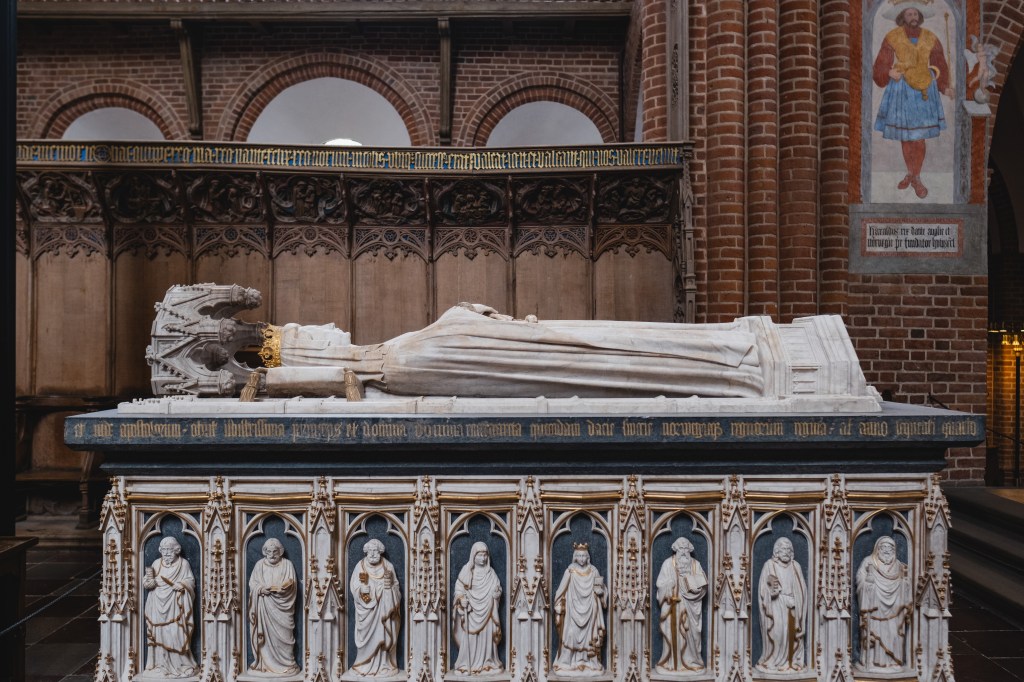
Queen Margarethe I’s Monument
© Foto Kristjan Løk Olsen_ Visit Fjordlandet
Margrethe I was buried in Sorø Abbey Church in 1412. However, in 1413, Margrethe’s body was moved to Roskilde Cathedral where she was reinterred during a three-day funeral party. The new king, Erik of Pomerania, demonstrated with the queen’s interment that the Cathedral was to be the future burial church for all regents of the Kalmar Union. Since Margrethe I’s funeral, almost all of the Danish regents have been buried in the Cathedral. The effigy shows Margrethe I dormant. Typical for that time, she can be seen prostrate and standing: The queen is dead, but the monarchy lives on. Margrethe I died at 59, but is depicted as a young woman. Most of the effigy is original.
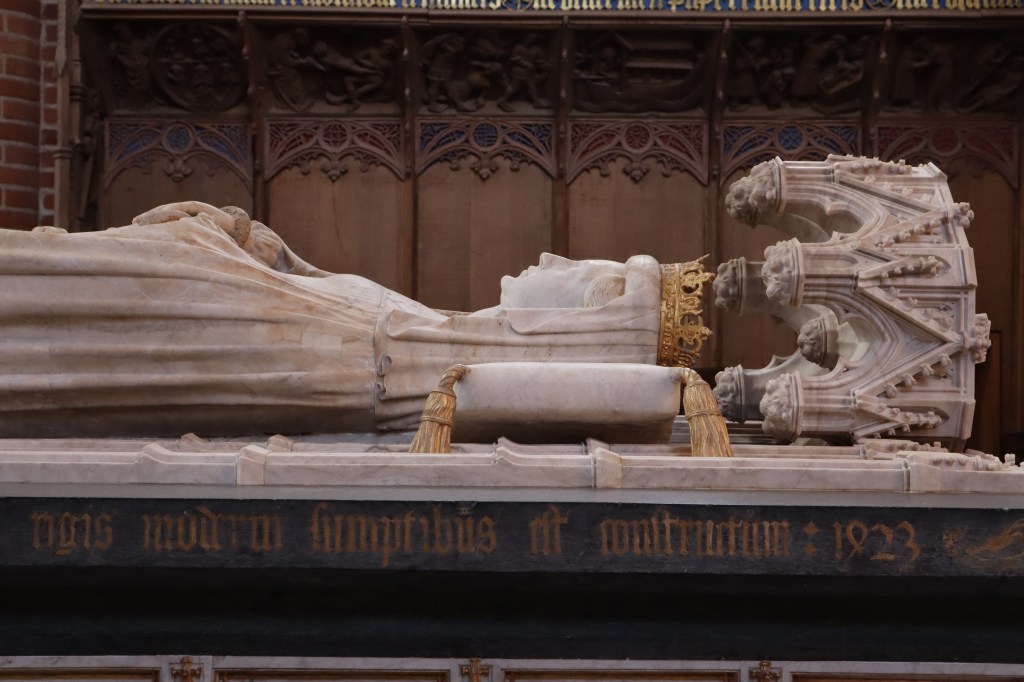
Queen’s Margrethe I’s sepulchral monument
© Roskilde Domkirke – Foto Sara Peuron-Berg
The Little Mermaid’s sisters
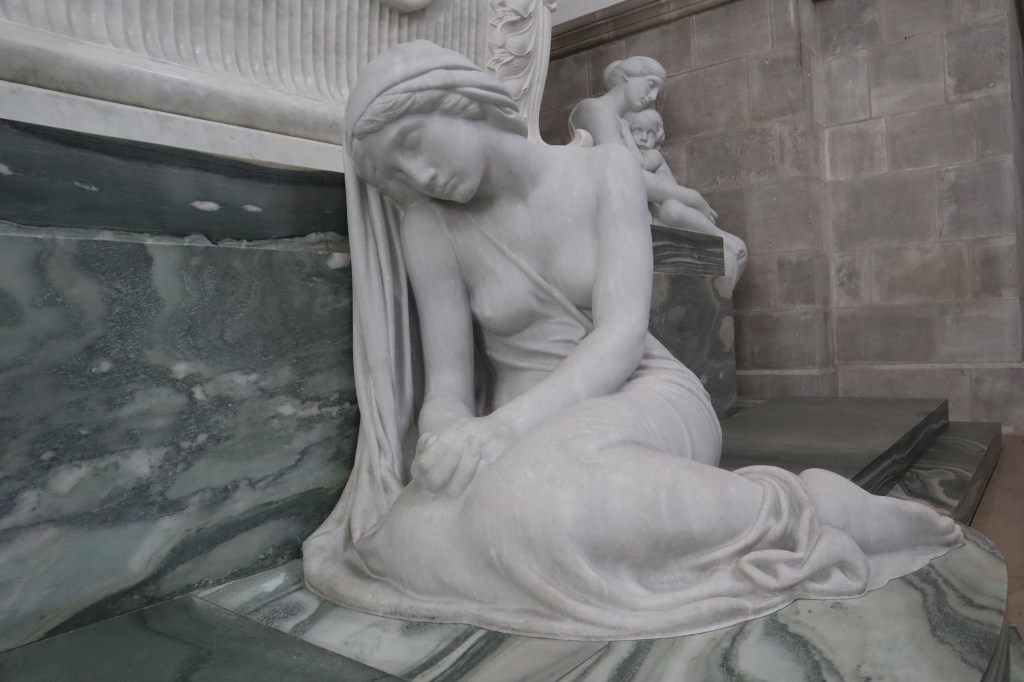
One of the statues of Christian IX’s Monument
© Roskilde Domkirke – Foto Sara Peuron-Berg
The Little Mermaid’s sisters is another name for the female figures on Christian IX and Queen Louise’s sarcophagus. They were made by the sculptor Edvard Eriksen (1876-1959) whose wife posed for them and his most wellknown work: The Little Mermaid. They symbolize Remembrance, Grief and Love.
 LES AMIS DU PATRIMOINE EUROPÉEN