
Masterpieces from the Galleria Borghese
Musée Jacquemart-André
6 September 2024 – 5 January 2025
www.musee-jacquemart-andre.com
PRESENTATION
Extracts from the press release
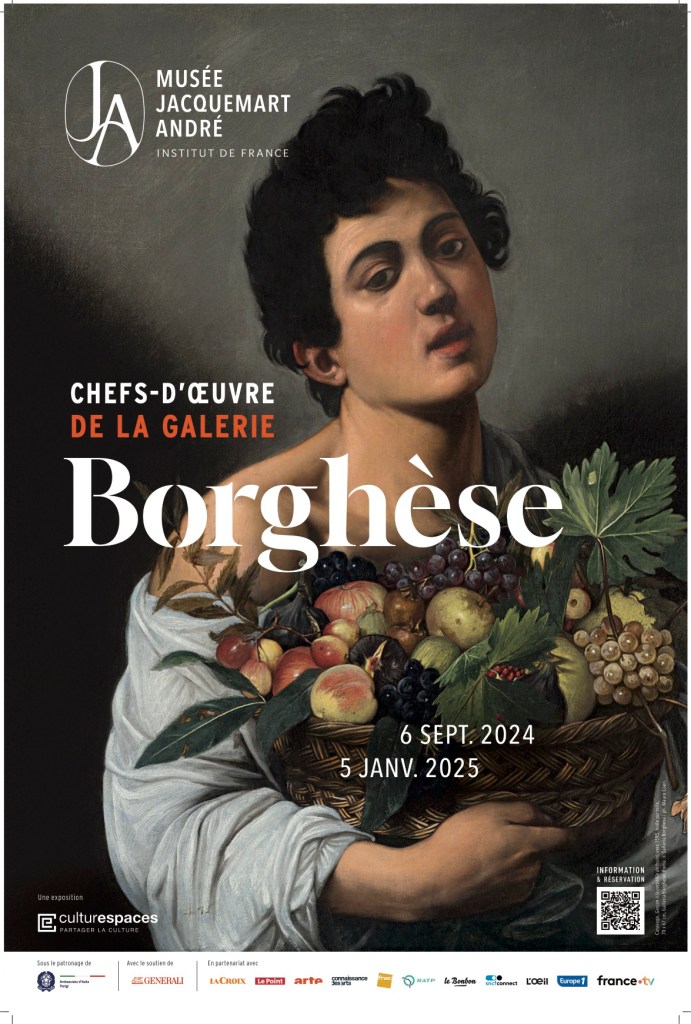
For its reopening after more than a year of renovation work undertaken under the direction of the Institut de France, the museum’s owner, the Musée Jacquemart-André is holding an exhibition of forty masterpieces from Rome’s famous Galleria Borghese. This exceptional partnership between the two institutions will give the general public an opportunity to admire in Paris an ensemble of major works executed by famous Renaissance and Baroque artists that are rarely loaned abroad, including works by Caravaggio, Rubens, Raphael, Titian, Botticelli, Veronese, Antonello da Messina, and Bernini.
The Villa Borghese Pinciana, which now houses the Galleria Borghese, was built between 1607 and 1616 by the powerful Cardinal Scipione Borghese (1577–1633), a nephew of Pope Paul V (1550–1621). Inspired by the luxurious Roman villas, Scipione decided to use the palace surrounded by gardens for exhibiting his collections of antique works and contemporary paintings and sculptures, evoking a new golden age. Possessed of great taste in art, an insatiable curiosity, and an extraordinary ability to identify the masterpieces amongst the works of his time, Scipione Borghese completed his collection by every possible means, legal or otherwise. He thus became one of the leading and most prominent collectors and patrons in the history of the art of his time, transforming the Villa Borghese into a veritable museum before the very notion of a museum existed. In accordance with his last wishes, all his collections and properties were passed down from one generation to the next without being dispersed for almost two hundred years, and the Borghese heirs continued to enrich the family’s heritage. Nevertheless, at the beginning of the nineteenth century, several hundred antique sculptures were given to Napoleon Bonaparte by his brother-in-law, Prince Camille Borghese (1775-1832); they were gradually replaced by new acquisitions. The Borghese family eventually sold the villa and its museum to the Italian State in 1902. The Galleria Borghese remains a symbol of Rome’s economic, cultural, and artistic prosperity in the modern age, and, as such, is a must-see destination for visitors of the Eternal City.
Thanks to the partnership between the Musée Jacquemart-André and the Borghese Gallery—in the context of a campaign of renovation work on the museum in Rome in the autumn of 2024—, this exhibition will present a selection of exceptional works from this unique art collection. The public will, in particular, be able to (re)discover works by the masters of Italian art from the sixteenth and seventeenth centuries (such as Raphael, Antonello da Messina, Parmigianino, Lorenzo Lotto, Titian, Veronese, Caravaggio, and Bernini) and Nordic painters who sojourned in Italy (Rubens, Gerrit van Honthorst, and so on). The exhibition will also pay tribute to painters who are less well known to the general public, such as Annibale Carracci, Guido Reni, Cavalieri d’Arpino, and Jacopo Bassano. The presentation of the exhibition’s works will shed light both on the history of the collection and the meaning of the major themes explored by the artists.
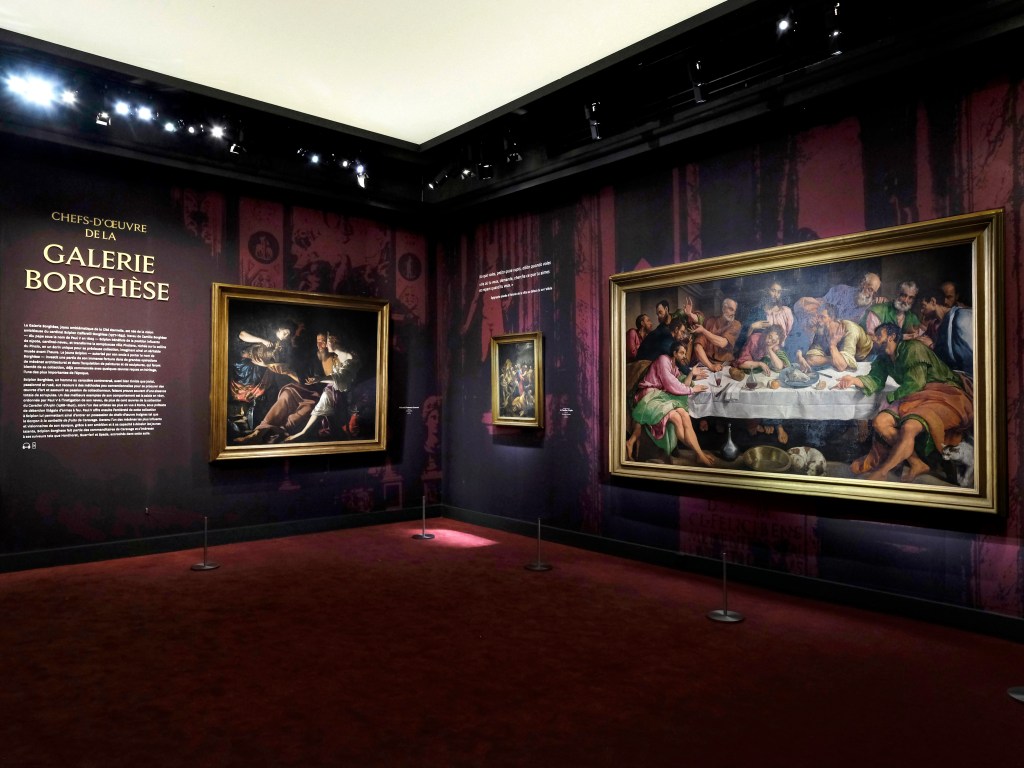
Inside the exhibition © Culturespaces © Nicolas Héron
A SELECTION OF MASTERPIECES
Selected by the curators of the exhibition
Francesca Cappelletti, Director of the Galleria Borghese,
and Pierre Jugie, Curator of the Musée Jacquemart-André
Boy with a Basket of Fruit
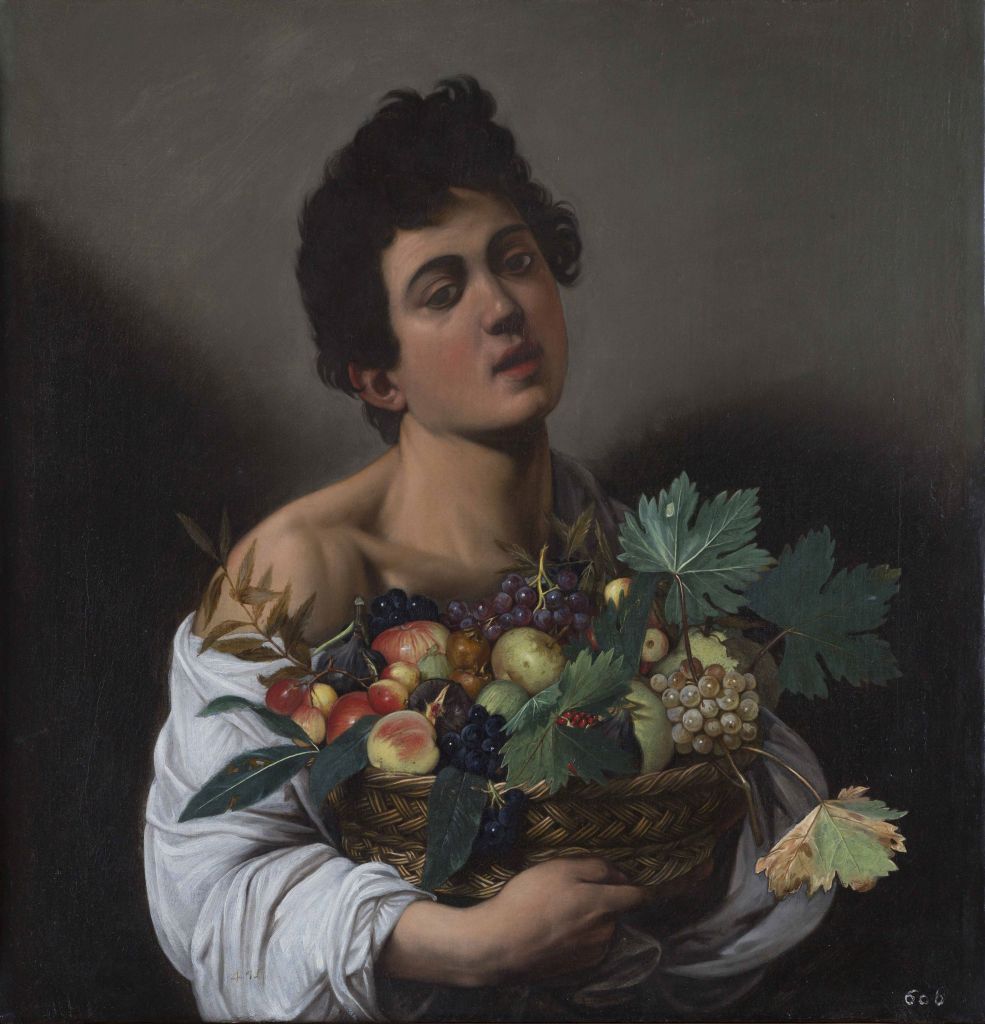
Caravaggio, Boy with a Basket of Fruit, circa 1596
oil on canvas, 70 x 67 cm
Galleria Borghese, Rome © Galleria Borghese / ph. Mauro Coen
This portrait of a young man holding a basket of fruit and autumnal leaves was painted by Caravaggio shortly after his arrival in Rome, where he was employed as a painter of flowers and fruit in the atelier of Cavalieri d’Arpino. The young painter from Lombardy already displayed in this work the extent of his talent as a realist painter, even representing the imperfections of the dried and faded leaves of the still life. The work was one of the first acquisitions made by Cardinal Scipione Borghese in 1607, and it was part of the famous expropriation of Cavalieri d’Arpino, who kept the work for several years after Caravaggio left his atelier. Accused of aggression and the illegal possession of firearms, the artist was forced to hand over his collection of paintings to Pope Paul V, who transferred them to his nephew, who presumably ordered this confiscation.
Sibyl
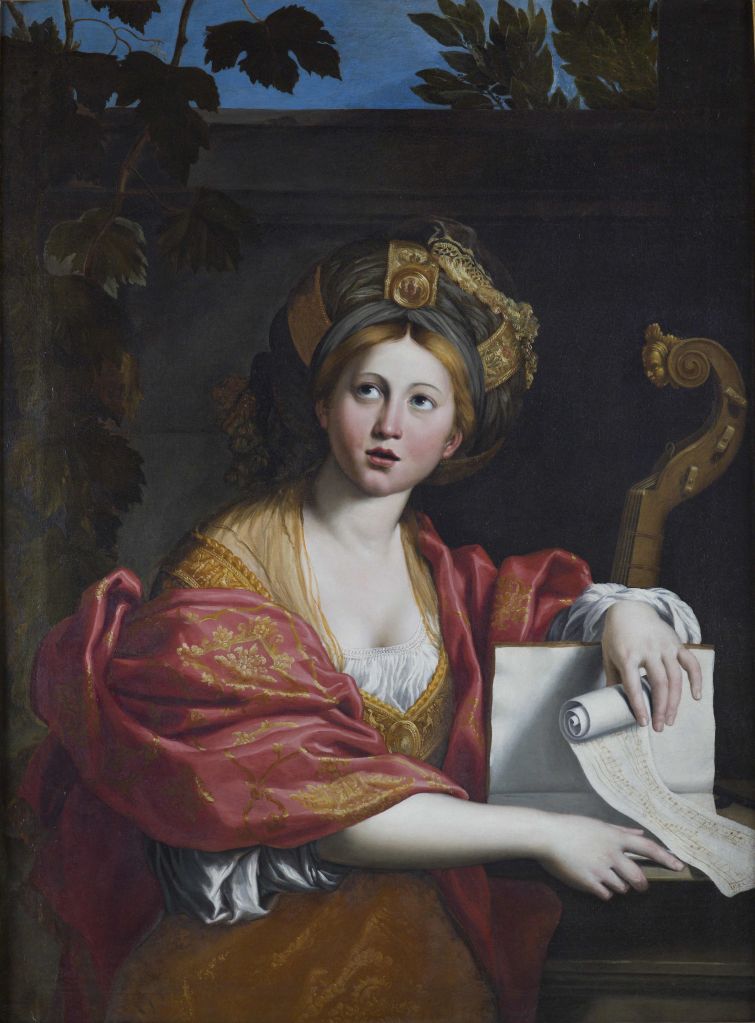
Domenichino, Sibyl, 1617, oil on canvas, 123 x 89 cm
Galleria Borghese, Rome © Galleria Borghese / ph. Mauro Coen
Scipione Borghese purchased this work directly from the painter in 1617. The young woman represented in half-figure is sibyl, as indicated by her turban. The twelve sibyls of Greek mythology were the priestesses of Apollo who were prophetesses. While this theme was very common in the seventeenth century, the addition of a musical instrument and a musical score was unusual and seems to have been a reference to the cardinal’s love of music as well as the involvement of Domenichino, who was an amateur musician himself, with the world of music. Other details—the laurel and the vine—combine sacred and secular symbols. The popularity of this work in the seventeenth century is attested by the many copies and replicas that were produced. A painter of the School of Bologna, Domenichino was highly appreciated by the cardinal, who had him imprisoned to oblige him to work for him.
Venus blindfolding Cupid
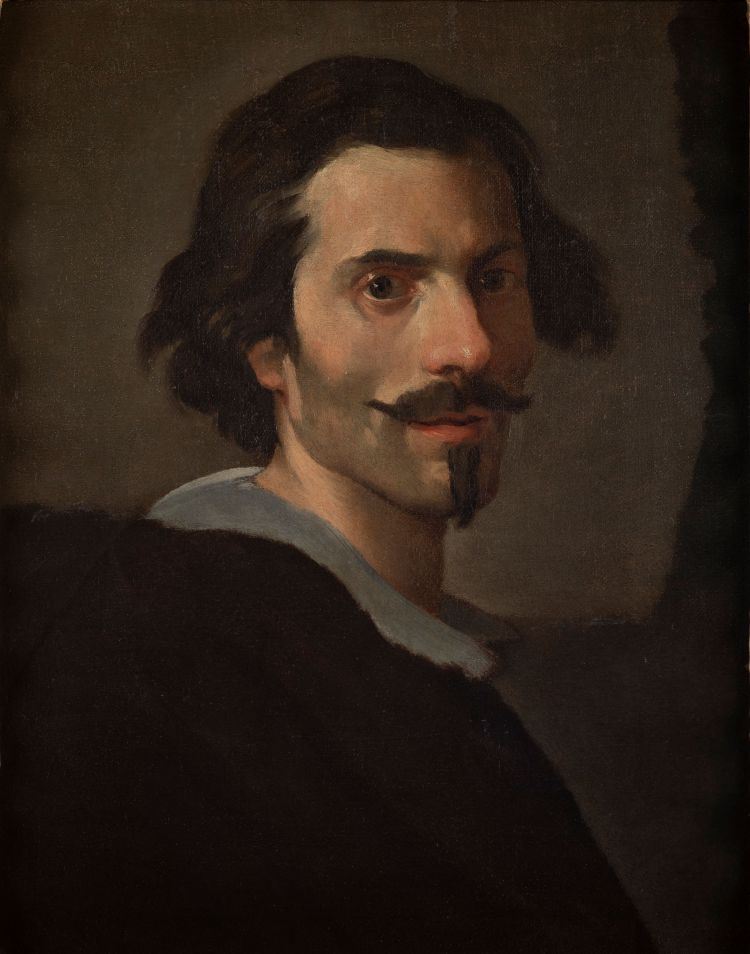
Gian Lorenzo Bernini, Self-portrait at a Mature Age, circa 1638-1640,
oil on canvas, 53 x 43 cm,
Galleria Borghese, Rome © Galleria Borghese / ph. Mauro Coen
Bernini is believed to have executed more than one hundred and fifty paintings between 1620 and 1640, but only a dozen of these have survived. Self-Portrait at a Mature Age is a remarkable example of his activity as a painter, as well as his interest in physiognomy, evident in his sculpted portraits sought after by the elites throughout Europe. The artist focused on the representation of his own face with its serious expression, deep stare, and his features that show the signs of ageing. The background—a bare wall—and his clothing are rapidly sketched with several brushstrokes that give the painting an unfinished appearance. The work entered the Galleria Borghese Collection in 1911 thanks to a donation by a German patron, Baron Otto Messinger. In the 1980s, Bernini’s Self-Portrait became truly famous when it featured on Italian fifty thousand lira banknotes.
 LES AMIS DU PATRIMOINE EUROPÉEN