
Sargent and Fashion
Tate Britain, London
22 February – 7 July 2024
www.tate.org.uk
🇫🇷 🇬🇧
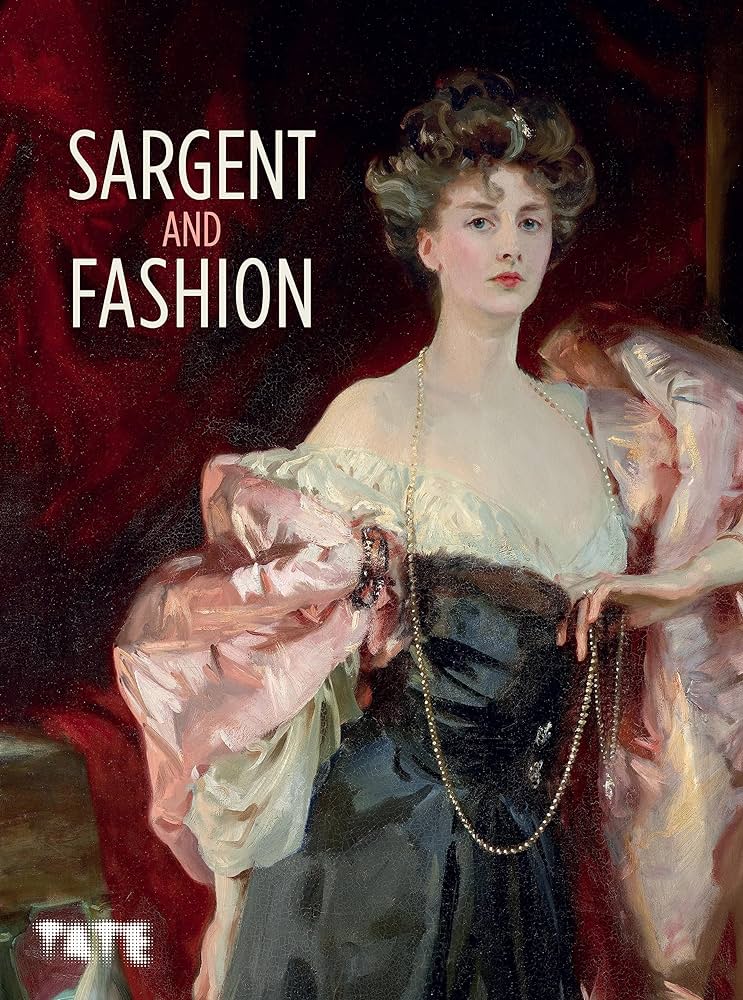
Tate Britain opens a major exhibition dedicated to the great portrait painter John Singer Sargent (1856-1925). It reveals Sargent’s ground-breaking role as a stylist, fashioning the image his sitters presented to the world through sartorial choices. Staged in collaboration with the Museum of Fine Arts in Boston, the exhibition features 60 works, including rare loans as well as works drawn from Tate and MFA’s extensive collections. These are shown alongside more than a dozen period dresses and accessories, many of which were worn by his sitters. Several of these garments have been reunited for the first time with Sargent’s portraits of their wearers, offering a fresh perspective on the most celebrated portraitist of his generation and the society in which he worked.
Sargent was renowned for the ability to bring his subjects to life. Rather than being driven purely by the sensibilities of his wealthy clientele, he used dress and fashion as a powerful tool to establish their individuality while proclaiming his own aesthetic agenda. He worked collaboratively with his sitters, but also took creative liberties, changing and omitting details as he saw fit. He regularly chose their outfits or manipulated their clothing, as in Lady Sassoon 1907 [see below], which is displayed at the start of the exhibition alongside the original black taffeta opera cloak worn in the image, revealing how he pulled, wrapped, and pinned the fabric to add drama to his portrait. In this respect, Sargent was working in a similar way to how an art director at a fashion shoot would today.
The exhibition tells the stories behind the artist’s key patrons, including nobility and influential members of the community. Collectively, Sargent’s portraits of the elite comprise the most compelling representation of fashionable high society at the turn of the decade. Highlights include Lady Helen Vincent, Viscountess d’ Abernon 1904 and Mrs. Charles E. Inches (Louise Pomeroy) 1887, which is juxtaposed with the red velvet evening dress illustrated. The regalia worn by Charles Stewart, sixth Marquess of Londonderry at the Coronation of Edward VII 1904 is reunited with the painting to show how the artist conveyed both rank and personality through clothing. Sargent’s artistic process and relationships are further explored using photographs, drawings, garments, and accounts written by his sitters. Key works such as Mrs Montgomery Sears 1899 are shown alongside Mrs Sears’ own dresses and her photographs of Sargent at work, while Mrs Fiske Warren and her Daughter Rachel 1903 is displayed with photographs documenting the portrait sittings in process.
Sargent and Fashion also explores the artist’s subversion of social codes and conventions through portraiture. His clothing choices suggest the blurring of characteristics that once defined masculine and feminine appearance, reflecting the shifting ground of traditional gender roles at the end of the 19th century. Sargent’s portrait Vernon Lee 1881 exemplifies this approach. Lee was the pseudonym of the British writer Violet Paget, who used the name professionally and personally. Her preference for severe, almost masculine clothing, shows a refusal to conform to conventional notions of femininity. The exhibition also features one of Sargent’s most dramatic and unconventional male portraits, Dr Pozzi at Home 1881, depicting the aesthete surgeon Samuel-Jean Pozzi in a flamboyant red dressing gown and Turkish slippers [see below].
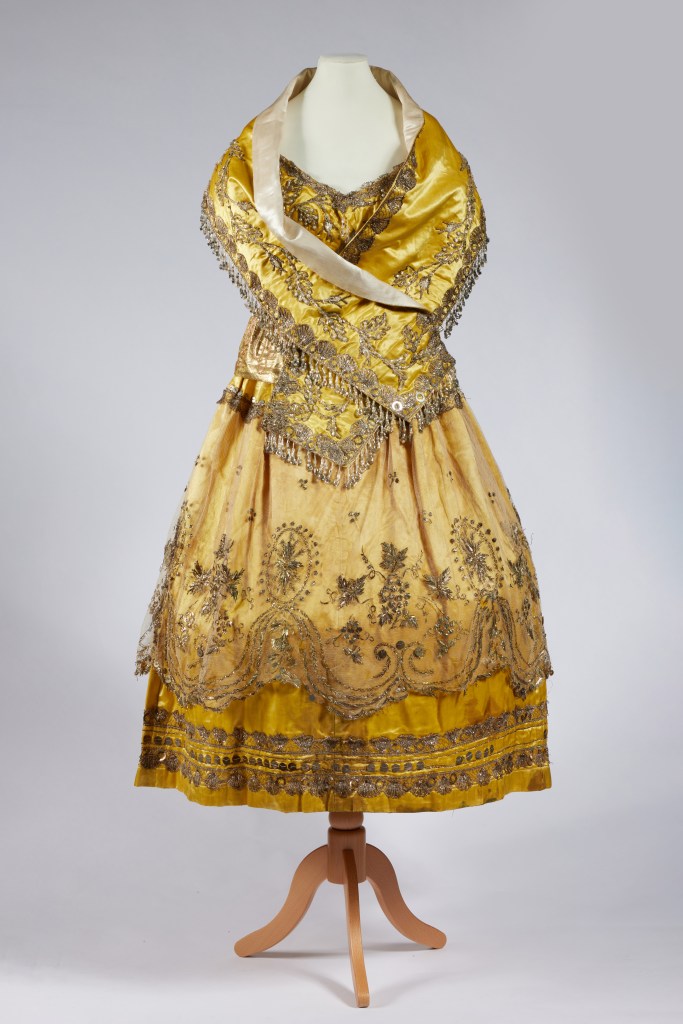
In addition to his patrons, Sargent chose to portray professional performers, including dancers, actors, and singers, which allowed him to indulge his taste for visual spectacle. His dramatic image of Ellen Terry as Lady Macbeth 1889 is exhibited alongside Terry’s dress and cloak, as well as La Carmencita 1890 [see below], depicting 21-year-old Spanish dancer Carmen Dauset Moreno, who performed in music halls across the United States, Europe, and South America. For the first time, visitors have the chance to view this stunning portrait next to the dancer’s sparkling yellow satin costume.
Together, this collection of paintings and garments offer a new generation and those already familiar with his work the chance to discover and reconsider Sargent and his enduring influence.
A CURATOR’S CHOICE
by the curators of the exhibition
James Finch, Assistant Curator, 19th Century British Art, Tate Britain
and Erica Hirshler, Croll Senior Curator of American Paintings, Museum of Fine Arts, Boston

John Singer Sargent, Lady Sassoon, 1907.
Oil paint on canvas; 157.5 x 104 cm
Private Collection. Image © Houghton Hall
In this portrait, Sargent posed Lady Sassoon wearing the taffeta opera cloak displayed nearby, to which pink roses were pinned. Her ensemble was completed with a string of pearls, bangles on both wrists, and a spectacular hat of black ostrich feathers. Raised in Paris, highly educated, and a lover of music and the visual arts (she was a talented artist who worked in pastel), Lady Sassoon had much in common with Sargent and they became good friends. Sargent enjoyed working in black on black, a technique he greatly admired in the work of the 17th-century Dutch painter Frans Hals.
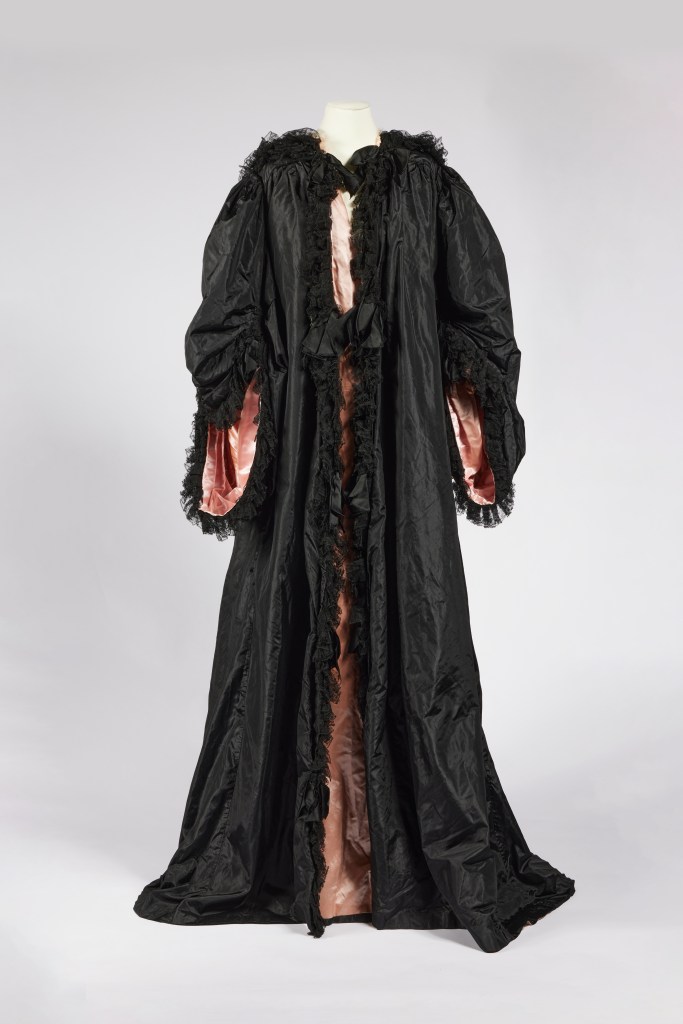
Opera cloak worn by Lady Sassoon, c.1895
Silk satin and taffeta with lace; 153 x 75 x 90 cm
Private Collection. Image © Houghton Hall
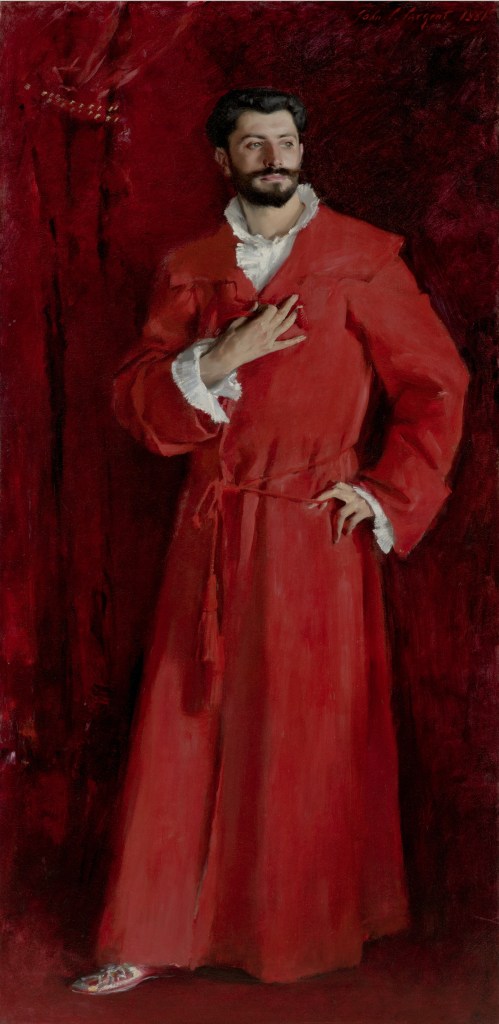
John Singer Sargent, Dr Pozzi at Home, 1881
Oil paint on canvas; 201.6 x 102.2 cm
The Armand Hammer Collection, Gift of the Armand Hammer Foundation.
Hammer Museum, Los Angeles
Samuel-Jean Pozzi was a Parisian doctor and specialist in gynaecology with links to avant-garde arts circles. In public, Pozzi dressed in fashionable tailored suits. Sargent chose to show him ‘at home’, subverting the conventions for portraits of professional men by depicting the intimacy of domestic space. Wearing a crimson dressing gown and Turkish slippers, he stands before a dark red curtain, as if he were nonetheless on stage. This was the first of Sargent’s works to be exhibited at the Royal Academy in London, where his friend Vernon Lee described it as displaying ‘an insolent kind of magnificence, more or less kicking other people’s pictures into bits’.

John Singer Sargent La Carmencita, 1890.
Oil paint on canvas; 221.0 x 114.3 cm
Paris, musée d’Orsay. Photo © Musée d’Orsay, Dist. RMN-Grand Palais / Patrice Schmidt
Carmen Dauset Moreno (better known as Carmencita) was a Spanish dancer who performed across the United States, Europe, and South America. Sargent found her ‘bewilderingly superb’, and saw her perform on multiple occasions in New York, where he painted her in a borrowed studio. She also danced at a private party at his studio in 1895. Carmencita was renowned for her whirling, twisting movements, captured in the original footage nearby. Sargent, however, painted her in a statuesque pose. The liveliness of the portrait comes from Sargent’s depiction of her shimmering gold and white dress.
 LES AMIS DU PATRIMOINE EUROPÉEN