A brisé fan from the 18th century
Deutsches Textilmuseum
Krefeld, Germany
www.deutschestextilmuseum.de

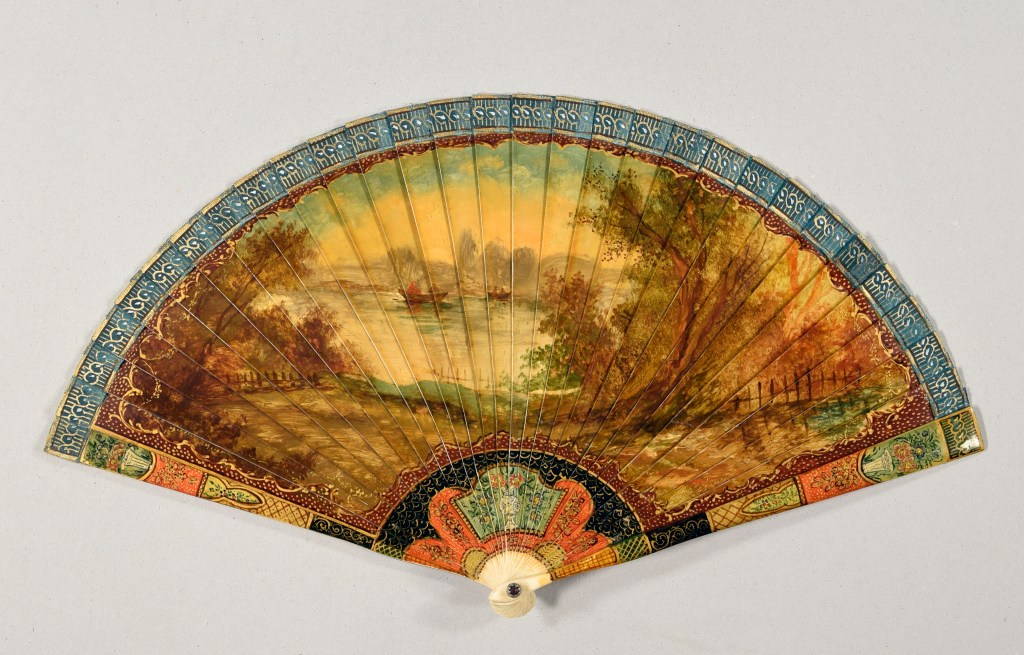
Brisé fan, France (?), first half of the 18th century (circa 1730-1750)
Inv. no. 29330
Monture: ivory, painted on both sides, tempera paint covered with varnish;
holding band: painted silk; rivet pin made of metal set with stones.
Length: 19 cm; width (max.): 40.5 cm; number of sticks: 30 (including guards)
© Deutsches Textilmuseum, Stadt Krefeld
Text : Jeanne Spriet, curator of the exhibition « C’est dans l’air – Fächer des 18. bis 20. Jahrhunderts im Deutschen Textilmuseum » (16.03.-10.08.2025), Deutsches Textilmuseum, Krefeld.
Published on 28th March 2025.
In 2023, the German Textile Museum received a donation of 17 fans dating from between the 18th and early 20th centuries. Made from a variety of materials and decorated in a wide range of ways, these charming accessories are an excellent addition to the museum’s existing fan collection.
As valuable cultural and historical objects, fans have served many purposes over the centuries. In fact, in addition to their function of ventilation, these portable objects used very close to the body were seen above all as means of communication at a time when ‘the gaze’ dominated official and private meetings, and when status, taste and prestige were expressed through clothing and gestures. Mysterious objects with a long history, fans are symbols of refinement and elegance.
This collection of fans is characterised by the diversity of the materials used, the techniques and the methods of decoration. In addition to ivory and tortoise shell, the fan leaves are made of wood and mother-of-pearl, as well as feathers, lace, silk, metal, lithography and fine paints. This collection provides an exemplary record of the cultural history of the European fan. Each fan tells its own story, and is a real eye-catcher.
From 16 March to 10 August 2025, the German Textile Museum is presenting all the fans in combination with clothing and other accessories from the museum’s collection.
The centre of the front of this brisé fan shows a gallant scene: a lady dressed as a shepherdess is sitting with a man on the shore of a lake, surrounded by architectural and natural elements. Two other people – a lady and a man fishing – are in a boat on the water. The reverse shows a landscape detail with a representation of the shoreline. Two boats are floating on the lake, each with a couple. The areas formed by the sticks and guards of the fan are filled with a cartouche painted in the manner of chinoiserie, with individual motifs repeated.
The theme and composition of the depictions are characteristic of the design of certain types of eighteenth-century fans. A very well-preserved example of an ivory fan with scenic representations, this fan is the only object from this period in the museum’s collection to showcase the multifaceted European fan fashion of the Rococo period.
The most important production centres for painted and lacquered ivory fans were in Holland and, above all, France. The subjects were based on graphic models, but they could also be commissioned from well-known paintings.
As part of the ‘Prestigesache – Bürgerlicher Kleiderluxus im 18. Jahrhundert’ exhibition (05.11.2023–16.06.2024), the fan was restored thanks to a grant from the Linn Flachsmarkt Association.
 LES AMIS DU PATRIMOINE EUROPÉEN