Three silver lions
Rosenborg Castle
Copenhagen, Denmark
www.kongernessamling.dk
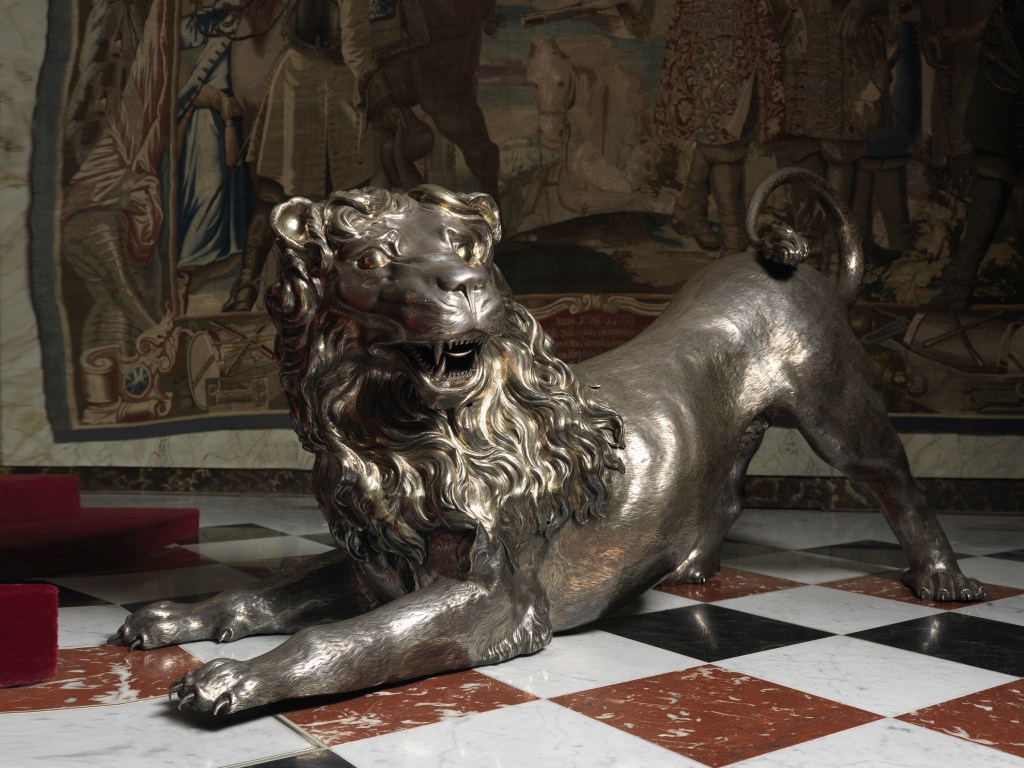
Figure 1 – One of the three silver lions in Rosenborg Castle
Rosenborg Castle, The Royal Danish Collection © Jim Lyngvild
Text : The Royal Danish Collection.
Many thanks to Thomas C. Thulstrup, Museum Director of the Royal Danish Collection.
The three silver lions at Rosenborg Castle (see figure 1) are a fascinating part of Denmark’s history. They simultaneously serve as a testament to grand staging and unrealized visions.
The three lions are made of silver with gilded manes and eyes (see figure 2). Each lion weighs about 50-60 kilos and is hollow inside. They were crafted between 1665 and 1670 by goldsmith Ferdinand Küblich in Copenhagen and were intended as a tribute to the biblical stories from the Old Testament about the righteous King Solomon, who ruled his kingdom from his ivory throne surrounded by twelve golden lions.
Frederik III, who reigned from 1648 to 1670, was deeply captivated by the stories of King Solomon, who was regarded as a wise king. Inspired by Solomon’s throne, Frederik III wished to create a similarly majestic throne surrounded by lions, not of gold but of silver and copper. By the time of Frederik III’s death in 1670, Küblich had forged three lions, while silver for a fourth lion was ready. However, the fourth lion was never crafted, and the silver was instead used for a sarcophagus for the king. According to later information from Küblich’s widow, the goldsmith had been commissioned to create six silver lions—likely to complement the six copper lions, for which he had received copper in 1667. Had the task been completed, Frederik III, surrounded by six copper lions and six silver lions, would have sat on his impressive narwhal throne in a staging matching King Solomon. However, this was not to be—the many silver lions were never finished, likely the same fate as the copper lions. Knowledge of these is now limited. Perhaps the two lions (see figure 3) guarding the bridge between Rosenborg Castle and the King’s Garden are from this group? Upon Frederik III’s death in 1670, the idea of King Solomon’s twelve lions was likely abandoned. Conveniently, three silver lions were completed, corresponding to the lions in the Danish coat of arms. Thus, from a biblical reference, the lions were now understood as the symbol of the Danish realm guarding the monarch at the foot of the throne.
The silver lions have played and continue to play an important role in official ceremonies in the Danish monarchy. During the absolute monarchy, the lions were used in two significant ceremonies—at the anointing, when a new king ascended the Danish throne and received the Lord’s blessing at Frederiksborg Palace Church, and at the ‘Castrum Doloris’ in the Church of the Palace in Copenhagen, when the kingdom’s inhabitants bid farewell to the deceased king’s body. In both ceremonies, the lions guarded the monarch as a symbol of Denmark—at the foot of the throne during the anointing and in front of the coffin at the ‘Castrum Doloris.’ The tradition of using the lions at ‘Castrum Doloris’ continues today, where the three lions from Rosenborg are brought to Christiansborg Palace Chapel to guard in front of the coffin upon a regent’s death before the burial. This tradition was most recently seen at the death of Frederik IX in 1972.
Today, visitors to Rosenborg Castle can admire the three silver lions in the Knight’s Hall (see figure 4), along with the impressive narwhal throne (see figure 5), which Frederik III also commissioned. The throne and the lions stand as a reminder of the king’s ambitions and his fascination with the biblical stories that shaped his time as a ruler. They also represent an unrealized vision, telling the story of a monarch with dreams in a society and era where not everything could be achieved. Thus, the three silver lions are not just a part of Denmark’s royal heritage but also a symbol of the historical self-understanding of kingship and its ceremonial traditions.
Here you can see a video (in Danish) about the three silver lions. You can also find them in the virtual tour of Rosenborg Castle.

Figure 2 – One of the three silver lions in Rosenborg Castle
Rosenborg Castle, The Royal Danish Collection © The Royal Danish Collection

Figure 3 – One of the copper lions on the bridge leading to Rosenborg Castle
Rosenborg Castle, The Royal Danish Collection © Henning Brandt
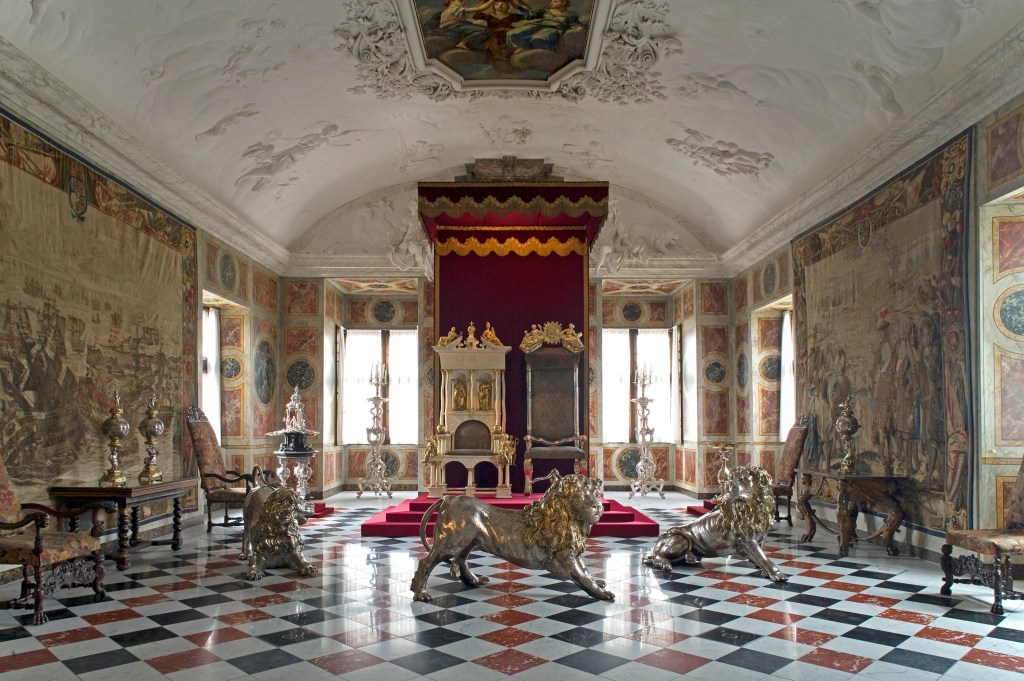
Figure 4 – The three silver lions and the thrones in the Knight’s Hall of Rosenborg Castle
Rosenborg Castle, The Royal Danish Collection © The Royal Danish Collection
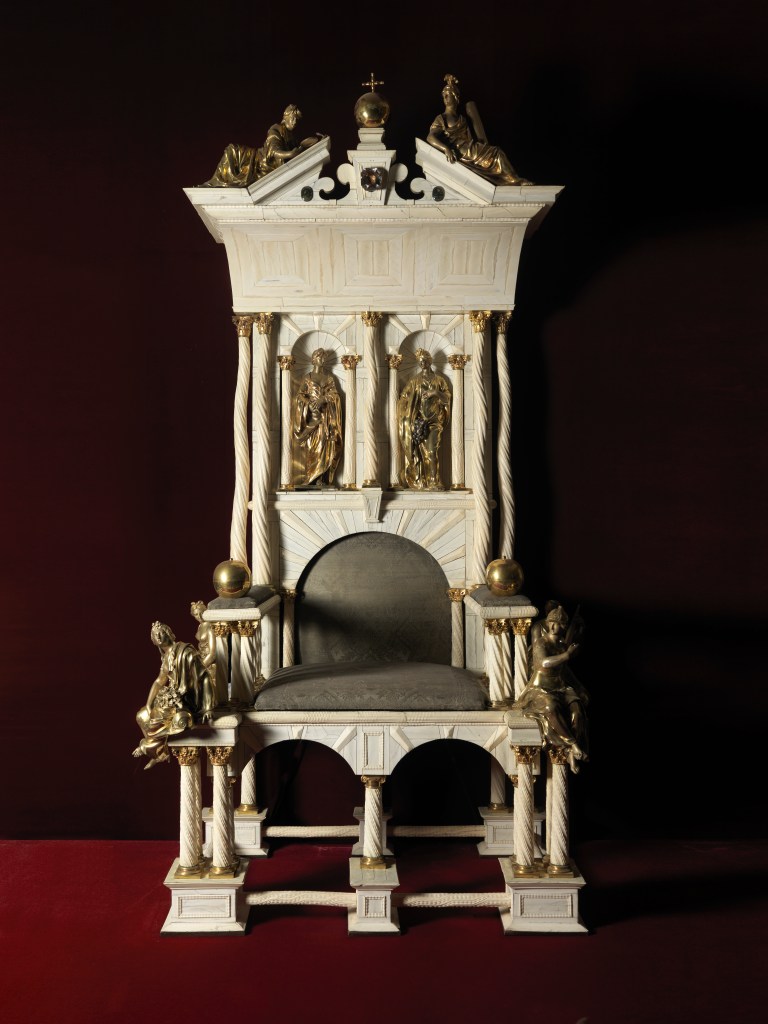
Figure 5 – Frederik III’s throne
Rosenborg Castle, The Royal Danish Collection © Jim Lyngvild
 LES AMIS DU PATRIMOINE EUROPÉEN