Coffee and tea set with lemon branches
The Wawel Royal Castle
Kraków, Poland
www.wawel.krakow.pl
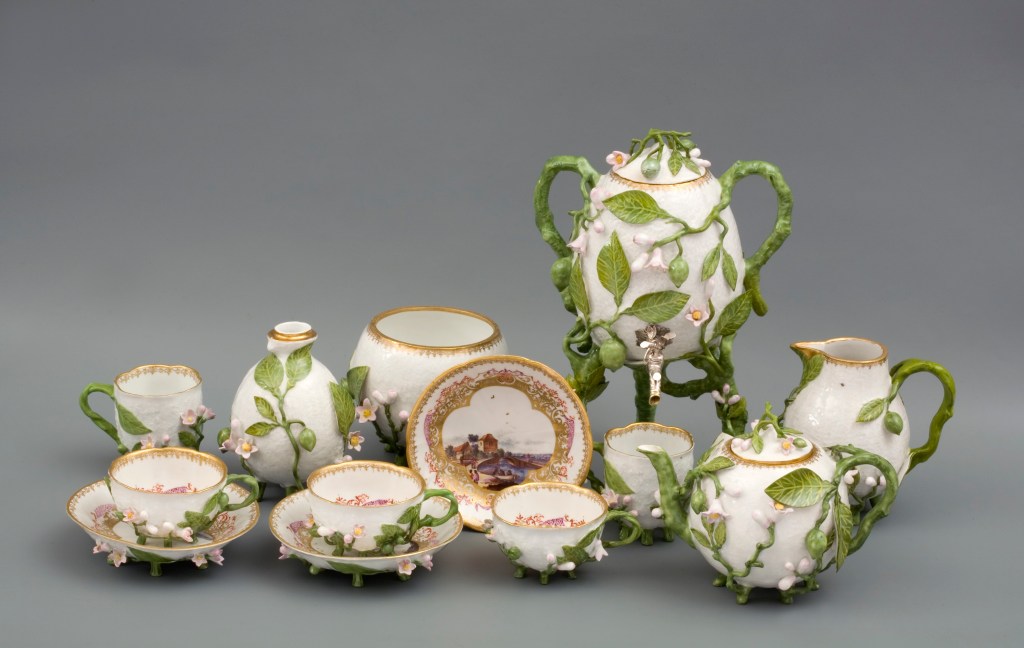
Fig. 1: Coffee and tea set with lemon branches
Meissen, 1740–1745, model from 1740: Johann Joachim Kaendler (1706–1775)
Porcelain Cabinet, The Wawel Royal Castle © The Wawel Royal Castle
Text: Dorota Gabryś, Curator of Ceramics and Glass Collection, The Wawel Royal Castle.
Among the over 300 objects presented in the mirror labyrinth of the Porcelain Cabinet in the Wawel Royal Castle, there is a set that attracts attention with its exceptional artistic design. The vessels of this set imitate lemon fruit – both in form, with a characteristic pointed protuberance, and in the texture of the surface covered with small recesses. All parts of the set have been entwined with naturalistically painted artistic decoration in the form of lemon tree branches – with leaves, flowers and small fruits. These branches have also been modelled into ears and handles, and their ends in all vessels function as legs. The painted decoration of the set is enriched by landscapes in the style of Johann Georg Heintze, which decorate the interiors of the bowls and saucers, placed in cartouches enclosed by a wide gold filigree complemented with red and purple.
In the work diary of Johann Joachim Kaendler from June and July 1740 we find detailed accounts of work on this set, made – as the modeller noted in several places – for the Polish king, Augustus III Wettin (probably intended for the king’s wife, Queen Maria Josepha). Kaendler noted the following vessels that were developed in turn: a teapot, a bowl, a milk jug, a mug with a handle, cups and saucers, a sugar bowl, a large coffee pot on three legs (with two handles) and a tea pot. In all the mentions, the sculptor emphasises the care taken in reproducing natural lemon twigs, leaves and flowers. It is difficult to judge today whether the spherical vessel preserved in the Krakow collections is a bowl or rather a sugar bowl, the other mentioned objects correspond to the descriptions of the royal modeller.
The design of the set is undoubtedly the result of Kaendler’s development of the idea of Far Eastern decorations applied to porcelain. In the 1721 inventory of Augustus II Wettin’s collection, Far Eastern white vessels – devoid of painted decoration and often decorated with artistic overlays – were described in the section entitled “white Chinese” (weiß chinesisch). Like many other objects from the collection of Augustus II, they became models for products of the Meissen manufactory. Johann Jacob Irminger, a goldsmith employed as a designer in 1710, developed a method of applying masks, leaves, flowers or ornaments to the bodies of vessels – known as Irmingersche Belege. The concept of applied artistic decoration was taken up in the 1730s by the most outstanding of the Meissen sculptors, Johann Joachim Kaendler, who designed vessels entwined with branches of roses, viburnum, or, as in the case of our set – lemon.
The tradition of trompe-l’œil and baroque bizarre – a conscious, sophisticated deception of the senses – were also important for the creation of the set. In the 1740s, vessels in the form of vegetables, flowers or animals became fashionable. Finally, the modeller’s concept was undoubtedly influenced by the enormous popularity of lemons at that time, a fruit that was essential both in the decoration of baroque tables and in culinary art, where they became an indispensable and enthusiastically used ingredient of the nouvelle cuisine that was conquering royal kitchens.
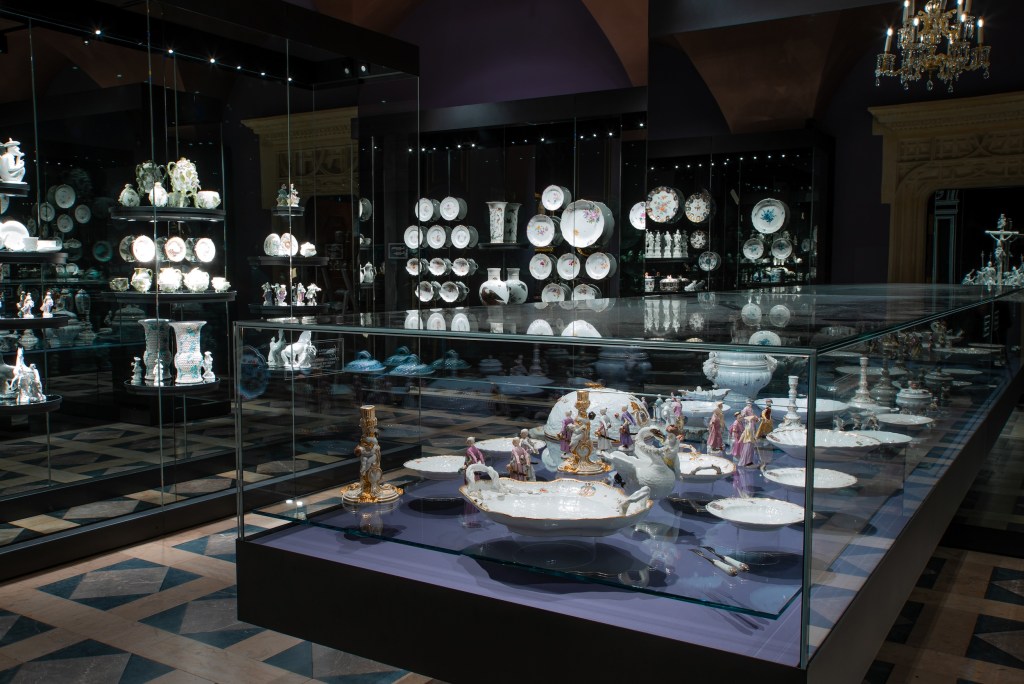
Fig. 2: The Porcelain Cabinet © The Wawel Royal Castle
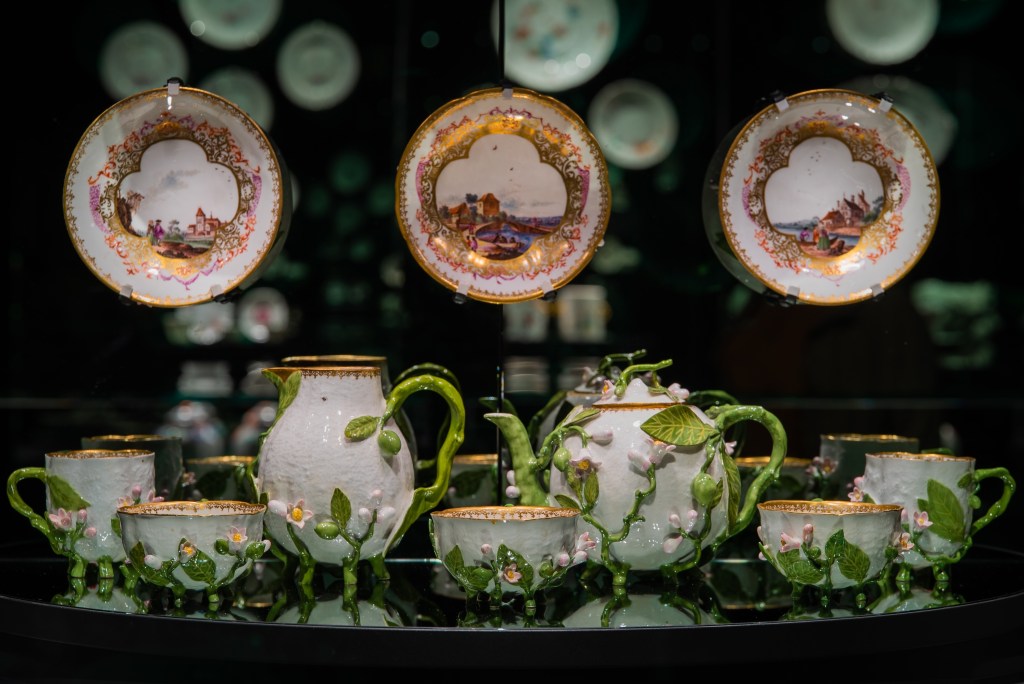
Fig. 3: A part of the service with lemon branches © The Wawel Royal Castle
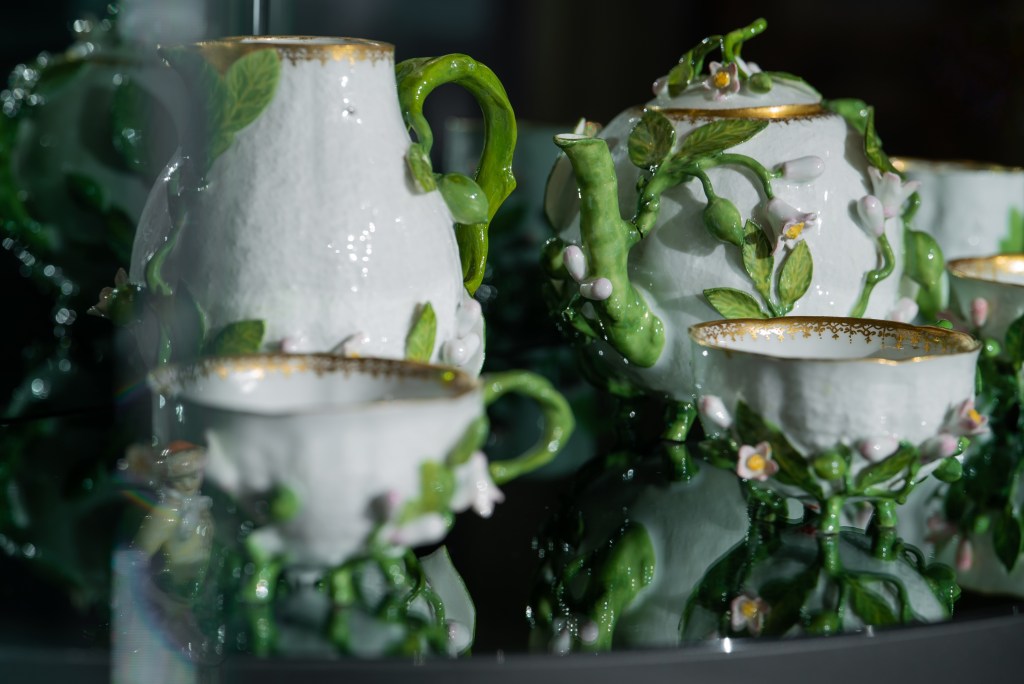
Fig. 4: A milk jug, a teapot and two cups © The Wawel Royal Castle
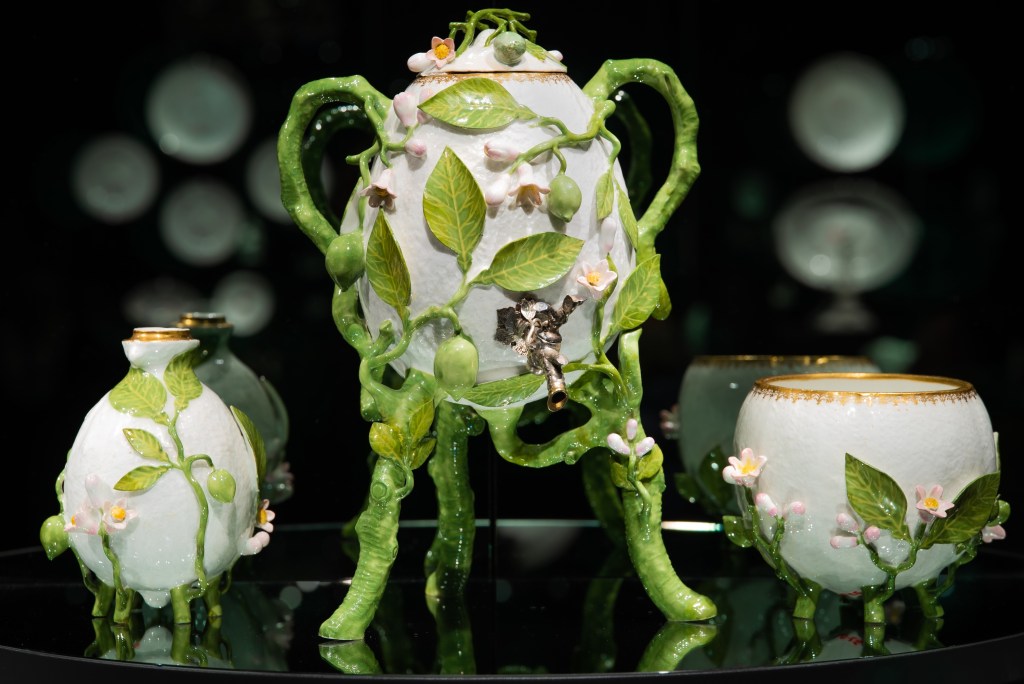
Fig. 5: A small bottle, a large bottle with tap for hot water and a sugar bowl
© The Wawel Royal Castle
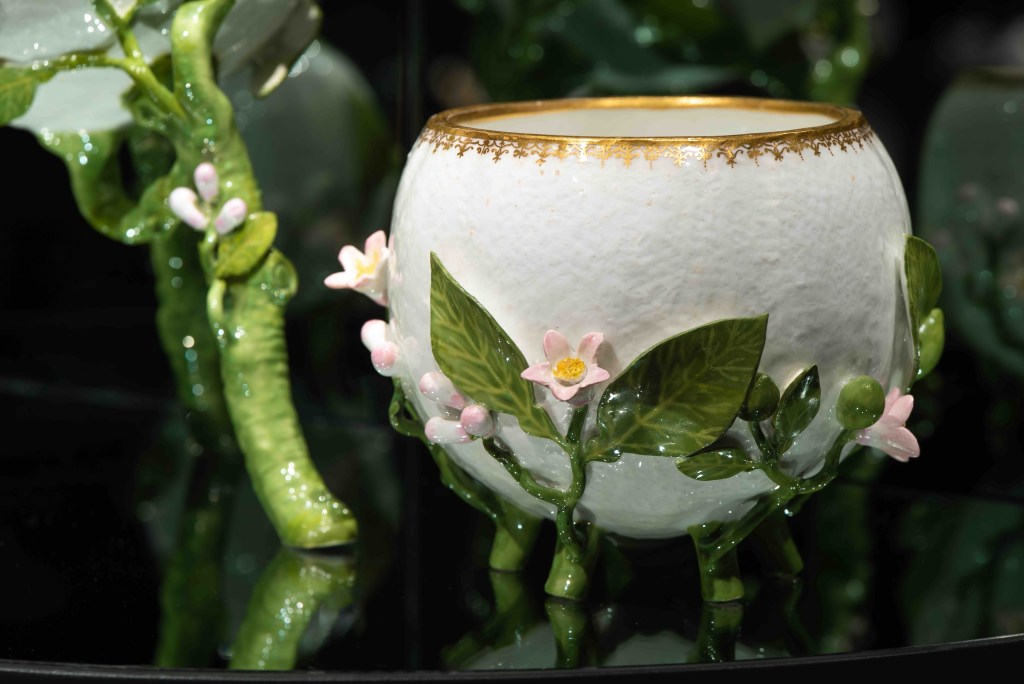
Fig. 6: A sugar bowl © The Wawel Royal Castle
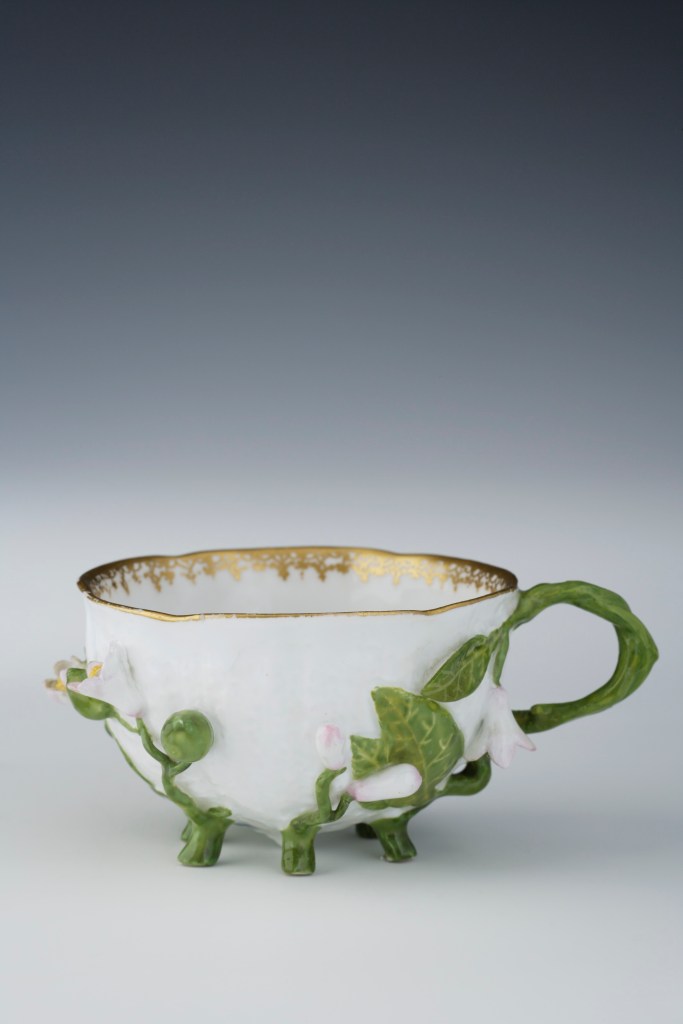
Fig. 7: A cup © Anna Stankiewicz
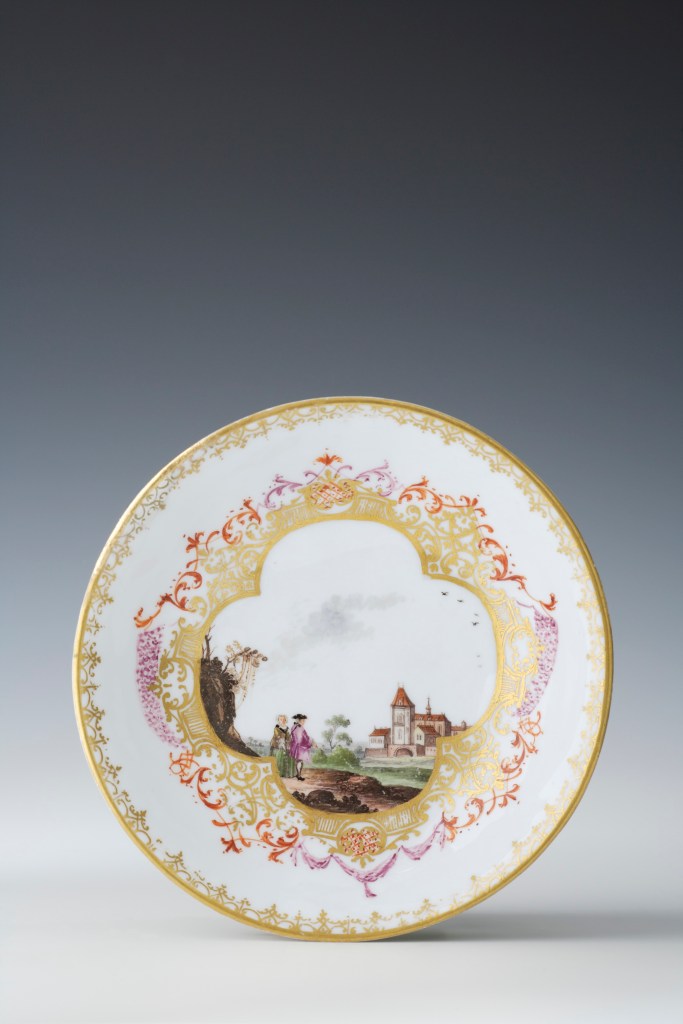
Fig. 8: A saucer © Anna Stankiewicz

Fig. 9: A milk jug © Anna Stankiewicz
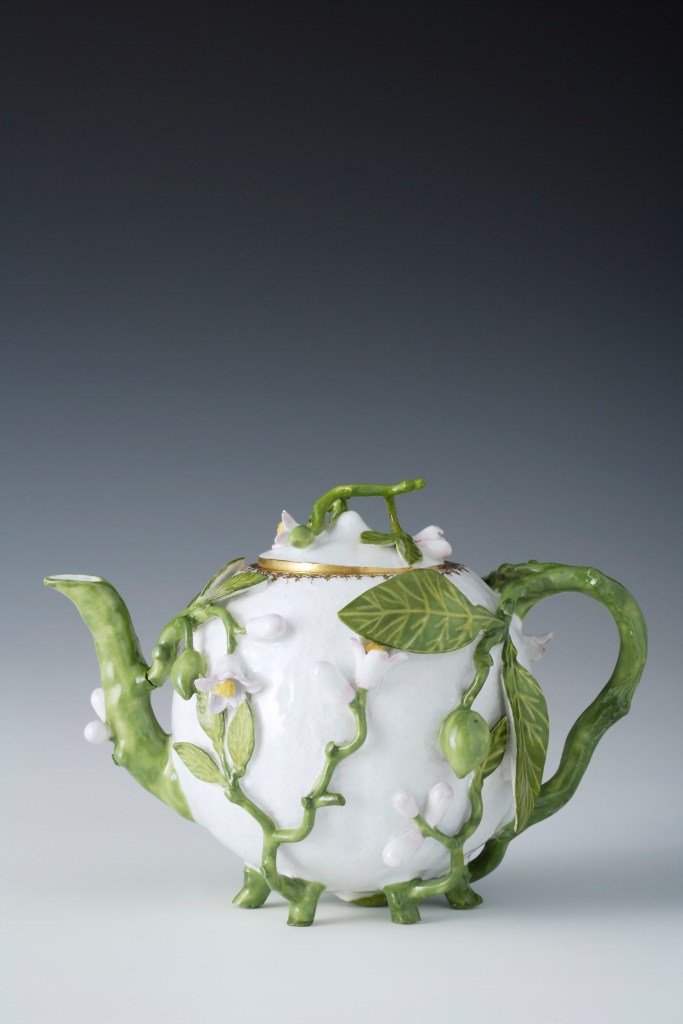
Fig. 10: A teapot © Anna Stankiewicz
 LES AMIS DU PATRIMOINE EUROPÉEN