
Francisco de Goya. Timeless Artistry.
Museum De Reede, Antwerp
10 October 2025 – 8 June 2026
museum-dereede.com
PRESENTATION
Francisco de Goya. Timeless Artistry.
[From the Press kit]
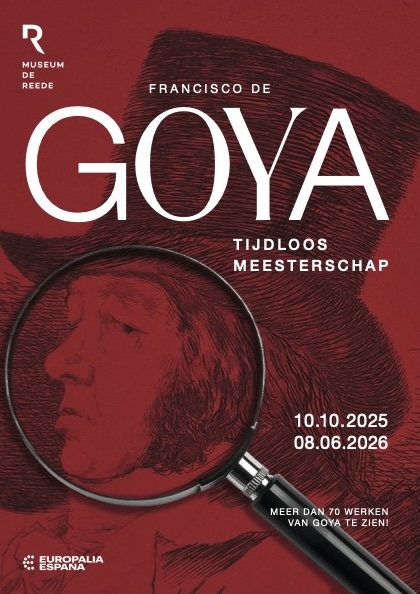
The graphic work of Francisco de Goya (1746–1828) is still considered groundbreaking and offers an unfiltered view of Spanish society at the time. To mark EUROPALIA ESPAÑA, Museum De Reede is presenting a special selection from its own collection. On display are 70 prints from the series Los Caprichos, Los Disparates, La Tauromachia and Los Desastres de la Guerra. These graphic works reveal Goya as one of the first truly modern artists: a keen observer, social critic and tireless denouncer of injustice and cruelty. His images transcend time and place, with themes that remain powerful and relevant to this day. The exhibition offers visitors not only a unique opportunity to experience Goya’s masterful prints up close, but also to discover how his critical eye and visual imagination still manage to move us centuries later.
Goya lived in a time of revolution, censorship and the violence of war. As a court painter, he knew the power of images in the hands of those in power. In the graphic series on display he chose to show the perspective of the victims. With his prints he gave a voice to the defenceless — to citizens, peasants, women and children affected by war and instability. In doing so, he became an exemplary exponent of social and democratic engagement in the arts. The choice of graphic art, with its capacity for repetition and dissemination, was also the ideal medium for giving shape to this new attitude to life. In this sense, Goya was a precursor of modern visual culture. His work shows how images can have a lasting influence on the way we think, feel and judge.
Two centuries later, Goya’s prints remain as relevant as ever. The raw immediacy of his etching needle, his empathy for human vulnerability and his sharp criticism of power and manipulation also touch on the major themes of our time. In a world once again ravaged by war, disinformation and polarisation, Goya’s moral urgency rings louder than ever.
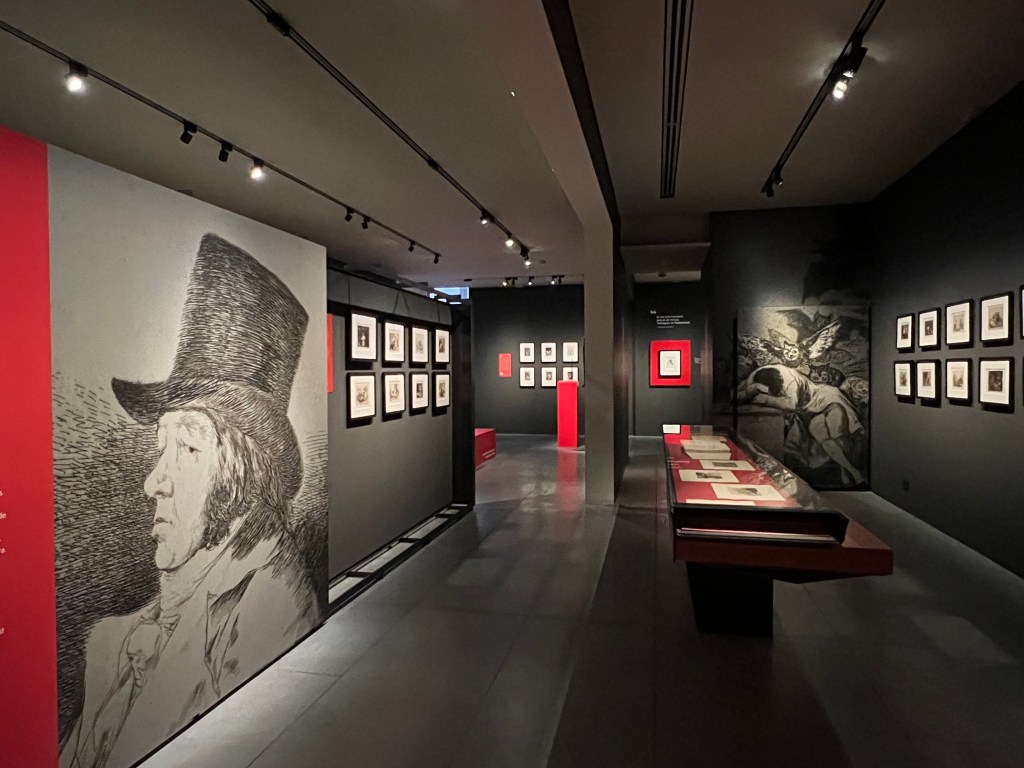
Goya Exhibition in Museum De Reede © Museum De Reede
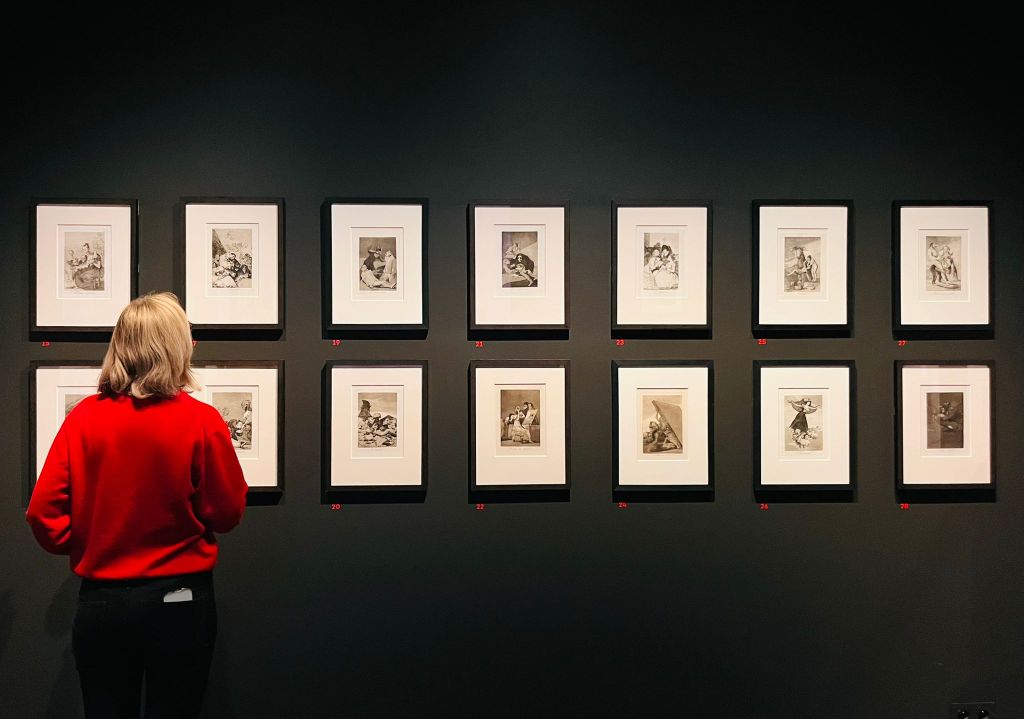
Goya Exhibition in Museum De Reede © Museum De Reede
A SELECTION OF WORKS OF ARTS
Los Caprichos
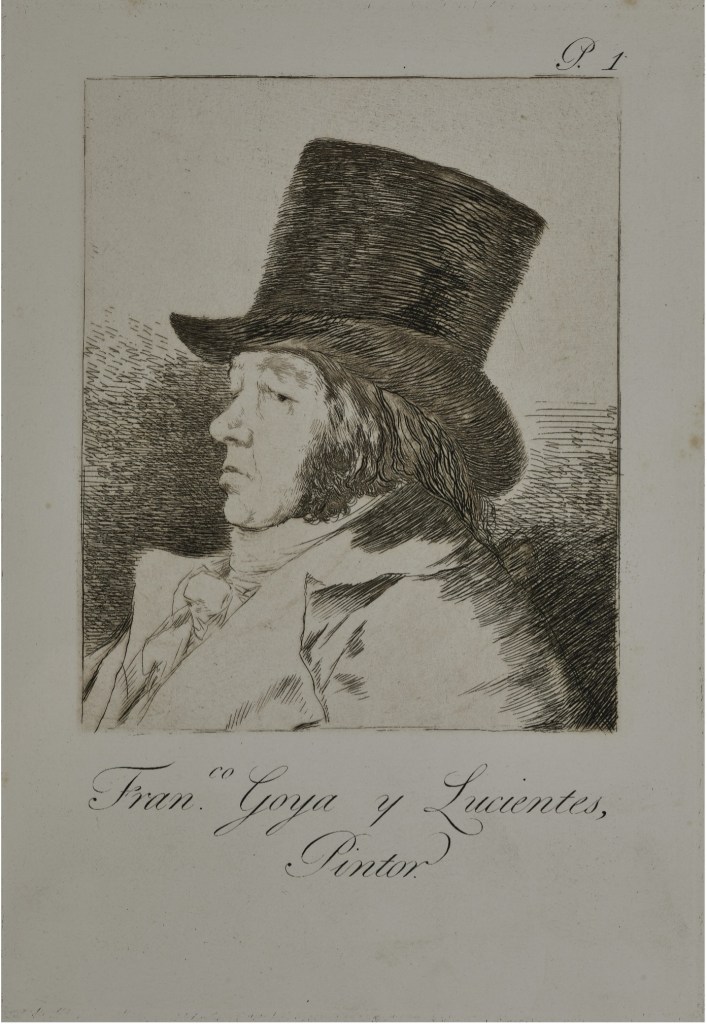
Francisco de Goya (1746–1828), Los Caprichos # 1, Self portrait.
Collection Museum De Reede, Antwerp © Museum De Reede, Antwerp
With this first plate of Caprichos Goya introduces himself as the author of the expansive work before us. This is no warm and unambiguous welcome, however. He does not even deign to turn and face us directly, giving us nothing more than his profile. His mouth is downturned and implacable, but it is that single visible eye which conveys the most: it is distrustful, censorious and world-weary.
La Tauromaquia
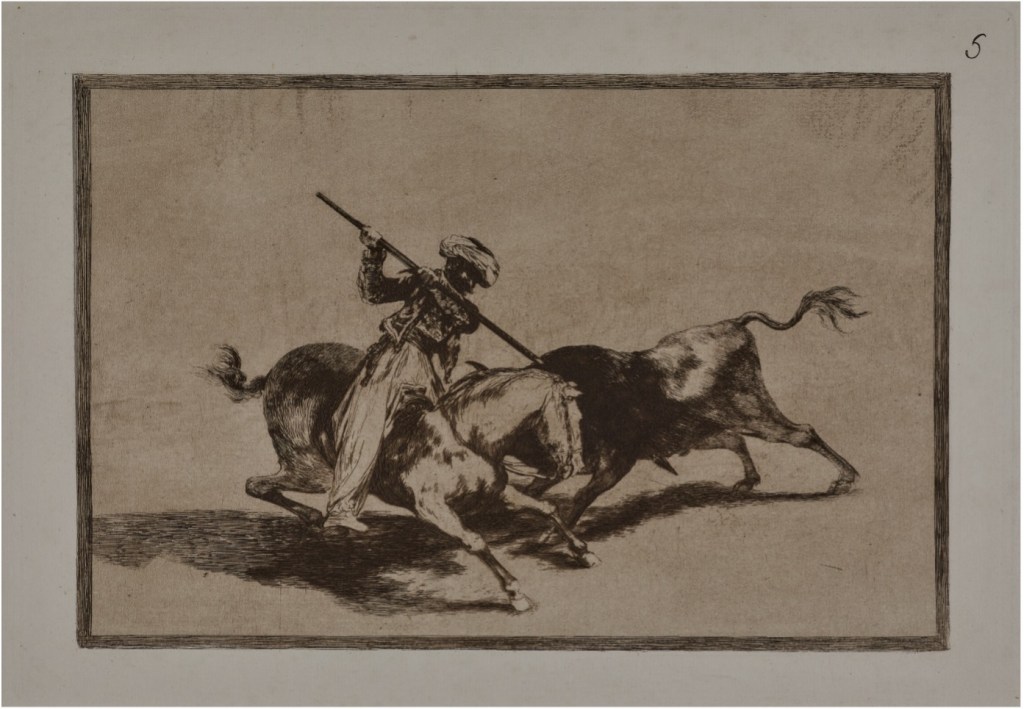
Francisco de Goya (1746–1828), La Tauromaquia # 5,
The Spirited Moor Gazul Is the First to Spear Bulls according to the Rules.
Collection Museum De Reede, Antwerp © Museum De Reede, Antwerp
A Moorish rider known as Gazul gallops into battle and drives his lance into a charging bull. Goya heightens the drama by setting Gazul’s white‑clad figure and rearing horse against a dark ground; the animal’s hind legs buckle as the rider leans forward, evoking chivalric tales of Muslim warriors. Whether Gazul was a legendary hero or a character from Moorish romances, the scene recalls the multicultural origins of bullfighting and its mixture of pageantry and violence.
Los Desastres de la Guerra
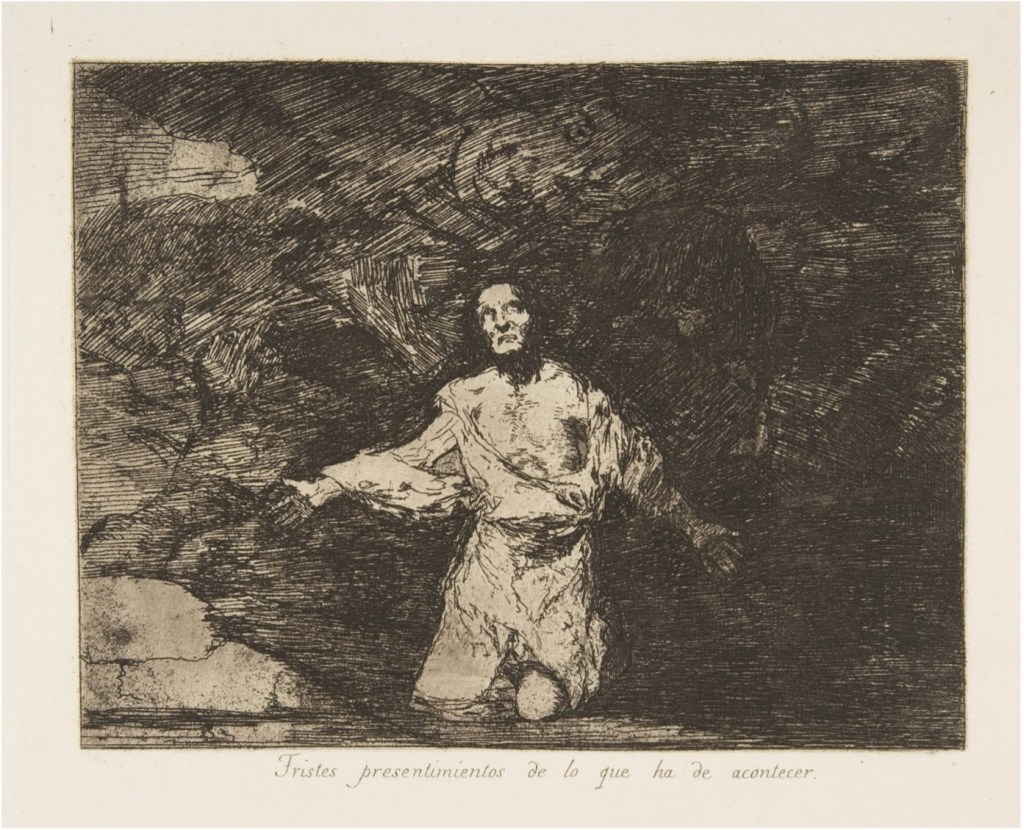
Francisco de Goya (1746–1828), Los Desastres de la Guerra # 1,
Sad Forebodings of What Is to Come.
Collection Museum De Reede, Antwerp © Museum De Reede, Antwerp
A lone, ragged man kneels in darkness with arms outstretched, gazing upward in despair. Goya’s shadowy aquatint creates an ominous fog poised to engulf the figure, suggesting the looming tragedy of war. The man’s vulnerable, Christ-like pose and haunting expression convey fear at the war’s onset – a foreboding vision of violence to come.
 LES AMIS DU PATRIMOINE EUROPÉEN